Model CD1, single speed wire rope electric hoist is small-sized lifting equipment, which can be mounted on single beam, overhead, gantry and jib cranes, with slight modification; it can also be used as a winch.
MORE
HOT PRODUCTS

Model CD1, single speed wire rope electric hoist is small-sized lifting equipment, which can be mounted on single beam, overhead, gantry and jib cranes, with slight modification; it can also be used as a winch.
MORE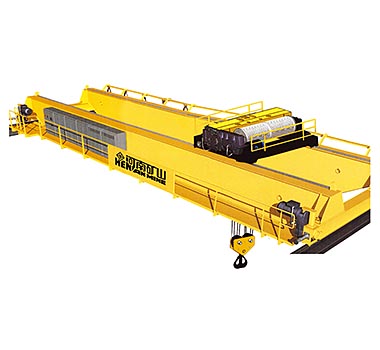
HNKS Crane Co., Ltd is one of Chinese leading manufacturers of many kinds’ cranes. Such as overhead Crane, gantry crane, European crane, tire rubber crane, metallurgy crane, portal crane, jib crane, electric hoist, grab bucket, etc.Welcome to Changyuan ...
MORE
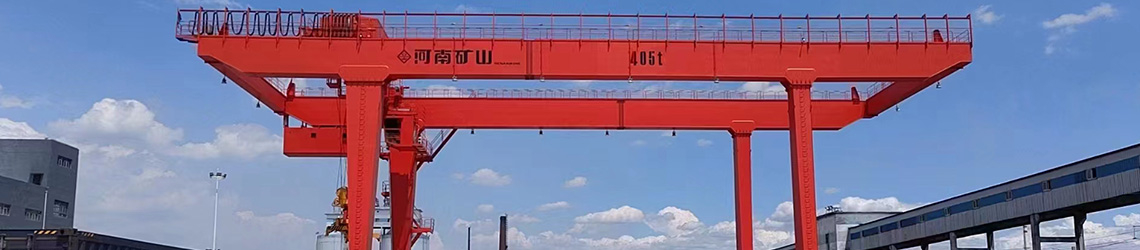
Gantry Crane actually is overhead crane with legs, it’s normally worked outdoors, and also sometimes indoors
MORE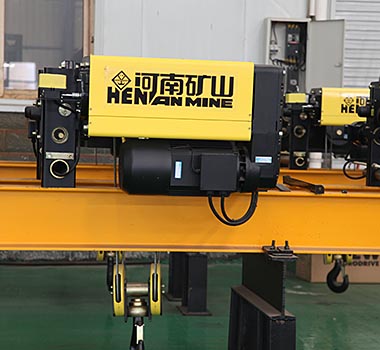
European wire ripe electric hoist adopts the European FEM design standards with advanced concept, the operation is simple, convenient and working is safety and efficient and meet the low noise, energy conservation and environment protection requiremen...
MORESmart Grab Overhead Crane For Blast Furnace Project | Henan Mine Crane
2023-04-26
The steel industry is currently accelerating reform, adhering to a development path characterized by capacity reduction through replacement, green and low-carbon practices, and intelligent manufacturing. The industry's growth model is undergoing a comprehensive shift from scale-based expansion to high-quality development, driving the evolution of traditional metallurgical equipment toward intelligence, automation, and high reliability; consequently, large-scale blast furnace projects are setting higher standards for the operational adaptability, automation capabilities, and safety performance of lifting and material-handling equipment.
An smart grab crane operates automatically under program control, following a preset operational path to designated locations to execute grabbing tasks. Upon completion, it automatically returns to a standby position, thereby enabling automated positioning within the production workflow. Capable of navigating obstacles and performing tasks with high precision and accuracy, these cranes enhance the intelligence of material handling operations. They are widely used across key sectors of the national economy, including metallurgy, electric power, coal, and brewing.
| 01 | This equipment was custom-developed based on the client's capacity replacement strategy and in alignment with the trend toward green industrial development, specifically tailored to the conditions of the project site. |
| 02 | Equipped with intelligent integrated systems—including PLC control, positioning, and anti-sway control—it delivers precise positioning and efficient operation. |
| 03 | The machine features a heavy-duty, wide-body structure with high fatigue strength, capable of withstanding on-site environments characterized by high temperatures, high humidity, and heavy mist. |
| 04 | Integrated with an intelligent sensing system, it enables various operations—such as the automatic grabbing, depositing, and transfer of materials—even in environments with extremely low visibility due to heavy fog. |
| 05 | On-site management is conducted via a remote dispatch and management system, eliminating the need for manual on-site operations and significantly reducing the physical workload of workers. |
| Standard smart grab crane | As a basic product model featuring manual on-site operation, it is suited for conventional bulk material handling scenarios that do not require advanced automation. It currently represents the largest share of the existing market and offers a relatively low procurement cost. |
| Fully automatic smart grab crane | Equipped with path planning, automated picking and unloading, and precision positioning capabilities, it enables fully unmanned operations and is suitable for high-efficiency scenarios such as co-processing in cement kilns, solid and hazardous waste transfer, and alternative fuel feeding. |
| Semi-automatic smart grab crane | It retains manual control capabilities while incorporating anti-sway and positioning assistance functions; suitable for the intelligent retrofitting of conventional cranes and for scenarios requiring improved efficiency in standard bulk material handling, the retrofit cost is approximately 30% lower than that of fully automated solutions. |
| Remotely controlled smart grab crane | It retains manual control capabilities while incorporating anti-sway and positioning assistance functions; suitable for the intelligent retrofitting of conventional cranes and for scenarios requiring improved efficiency in standard bulk material handling, the retrofit cost is approximately 30% lower than that of fully automated solutions. |
| Customized Service for Smart Grab Cranes | Customized adjustments can be made to suit the specific operating conditions of various industries—such as explosion-proof requirements in the chemical sector, high-temperature resistance in non-ferrous metallurgy, and high wear resistance in the power industry—thereby meeting the specialized safety standards of niche sectors. |
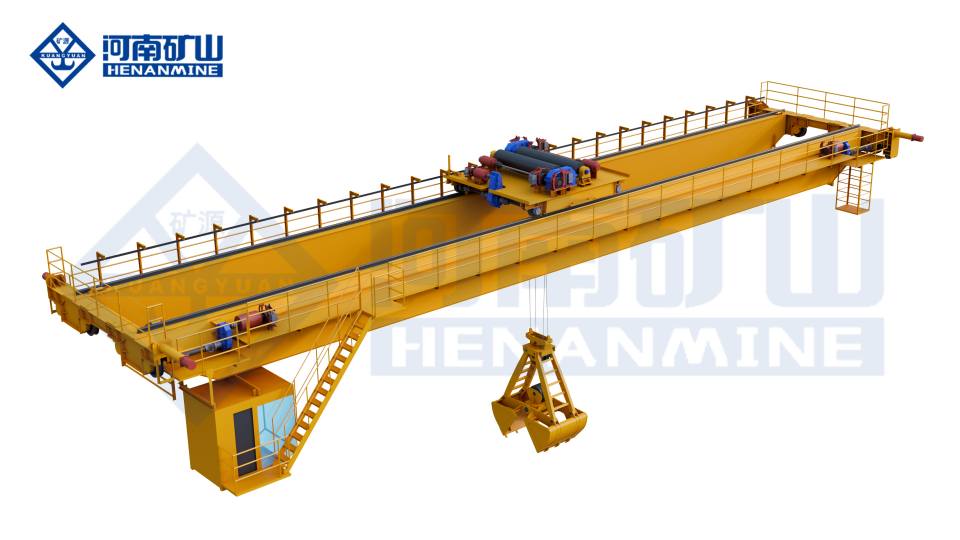
The smart grab crane is a piece of high-end automated equipment that integrates mechanical, electrical, hydraulic, and artificial intelligence technologies. To achieve precise positioning, automatic grabbing, sway control, and full-lifecycle management, the system typically comprises the following core components:
Grab: The operational component that performs the actual lifting work; common types include clamshell (two-jaw), multi-jaw, and hydraulic grabs. These grabs often integrate weight sensors, open/close status detection, and anti-jamming mechanisms, enabling them to handle bulk materials of varying densities (such as waste, coal, and ore).
Metal Structure (Bridge & Trolley): The main girder bridge serves as the equipment's core load-bearing component. It typically features a welded box-girder design using Q355-B steel, with full-length internal diaphragms ensuring structural stability. Mechanical stresses are calculated in accordance with FEM standards (Class 8), and deflection under full dynamic load does not exceed 1/1000 of the span; the main web plate thickness is typically 8mm. The end carriages are generally fabricated from welded Q355-B steel plates with an unequal-height design, and both ends are equipped with rail-clearing devices as well as protection systems against derailment and wheel damage.
Servo/Variable-Frequency Drive Motors: Typically utilizing an imported "three-in-one" drive configuration paired with hardened-gear reducers, these provide power for the travel mechanisms (bridge and trolley), the hoisting mechanism, and the grab bucket's opening/closing functions, enabling smooth speed regulation and precise control.
PLC (Programmable Logic Controller) and Industrial Computer: Acting as the system's "brain," these components handle sensor signal acquisition, execute automated control logic algorithms, and communicate with the host computer.
Anti-Sway Control System: A combination of core control hardware and software that calculates the spreader's swing angle and speed in real-time, automatically adjusting the motion trajectory to eliminate grab bucket oscillation.
High-precision positioning sensors: Utilize technologies such as laser ranging, absolute encoders, barcode positioning, or BeiDou/GPS to accurately obtain the grab's real-time 3D coordinates (X, Y, and Z axes) in space.
AI vision and laser scanners: Used to perform 3D scanning of material piles (e.g., in waste pits or storage yards) and generate material level maps, enabling algorithms to automatically plan optimal grabbing points. They also facilitate the identification of specific targets, edge detection, and the monitoring of safety zones to prevent foreign object intrusion.
Anti-collision and limit devices: Includes laser/infrared anti-collision sensors, ultrasonic detectors, and travel limit switches to prevent collisions between units or over-hoisting.
Load and status monitoring instruments: Real-time monitoring of lifting load, motor temperature, current, and wire rope tension and wear to prevent overloading and off-axis lifting.
Central Control Room and HMI (Human-Machine Interface): Operators can perform one-touch startup, manual intervention, or panoramic monitoring via high-definition touchscreens or remote control consoles located in the air-conditioned control room.
IoT Data Platform: Aggregates comprehensive operational data to support intelligent fault diagnosis, energy consumption analysis, and preventive maintenance alerts.

It employs a combination of fixed and mobile radars to acquire data; the fixed radars cover the majority of the area, while the mobile radars capture detailed data to fill in the gaps.
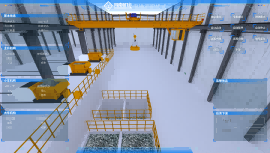
Also known as the 3D modeling system for stockpile profiles within the storage area, this system utilizes LiDAR sensors installed on overhead cranes, feed inlets, and discharge outlets. Edge computing devices analyze and process vast amounts of raw data to generate 3D stockpile models. By applying pre-configured zoning and classification protocols, the system optimizes crane path planning and stockpile management, dividing the storage facility into three distinct zones, infeed, storage, and discharge, thereby effectively resolving issues related to disorganized stockpiles and low operational efficiency.
The 3D modeling system major functions:
Optimization and control of overhead crane operations: The system coordinates tasks such as production, truck unloading, and stockpile leveling; intelligently adjusts task priorities; optimizes travel paths to boost efficiency and minimize travel distance; and automatically issues commands based on signals—such as material consumption, downstream equipment status, and flow rates—to enable fully automated operation. Additionally, a manual input interface is provided for commands, allowing specification of material type, operation type (infeed, transfer, or outfeed), and required quantity (number of cycles or weight). Each storage bay in the combined storage facility is divided into three zones: the infeed zone, the storage zone, and the outfeed zone.
Feeding: Material enters the feed zone through the feed inlet (truck feed inlet or conveyor belt feed inlet).
Material Discharge: Based on the material level in the discharge bin, the system schedules the overhead crane to perform discharge operations at irregular intervals. This ensures the material level meets continuous production requirements and prevents issues such as material supply interruptions.
Inter-zone material transfer: Materials are moved from the infeed zone or a storage zone to a designated location within a storage zone. High and low stock levels are defined for the infeed zone: if the stock level exceeds the high limit, infeeding stops and the crane transfers material away from the infeed point; if the stock level falls below the low limit, infeeding is permitted, but the crane is prohibited from transferring material away from the infeed point.
Coordinated and optimized control of overhead cranes: During periods of heavy production demand, two cranes operate in coordination, with optimized task and work-zone allocation to prevent operational conflicts. During periods of lower activity, materials for upcoming scheduled tasks can be pre-positioned near the discharge point, facilitating faster processing should urgent tasks arise.
Material Proportioning and Handling: Materials are selected and handled based on raw material grades and blending requirements to ensure consistent raw material properties.
Unloading Management: Identifies the truck's unloading port and controls the access system to open or close the roller shutter door.
Intelligent Fault Analysis: Analyzes faults based on the status of equipment in the storage area.
Safety Management: Integrating intelligent surveillance systems and safety monitoring equipment, this function manages operational and equipment safety within the storage area by automatically or manually defining no-hoist zones and automatically designating safe travel paths.
Material Inventory Calculation: Calculates material volume and weight based on material height, facilitating inventory checks; Reporting, Alarms, and Data Logging: Records data such as operational workflows and fault alerts, enabling easy data retrieval.
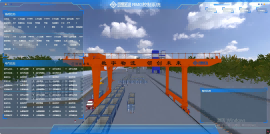
This AI-driven intelligent operations and maintenance platform utilizes advanced sensor technology to monitor the operating status of cranes in real time. It precisely captures a wide range of parameters, including lifting loads and operating speeds, as well as the temperature and vibration levels of critical components. The platform also incorporates AR-enabled remote collaboration capabilities; when issues arise on-site, frontline operators can use smart devices to activate AR functions and interact in real time with remote expert teams. This allows for "hands-on" guidance within a virtual environment, enabling rapid problem diagnosis and resolution. Leveraging the vast amounts of data collected, the platform provides decision-making support to both the enterprise and its customers. By analyzing operational data from numerous cranes on the production line, the system optimizes production workflows, schedules equipment usage efficiently, and boosts overall productivity.
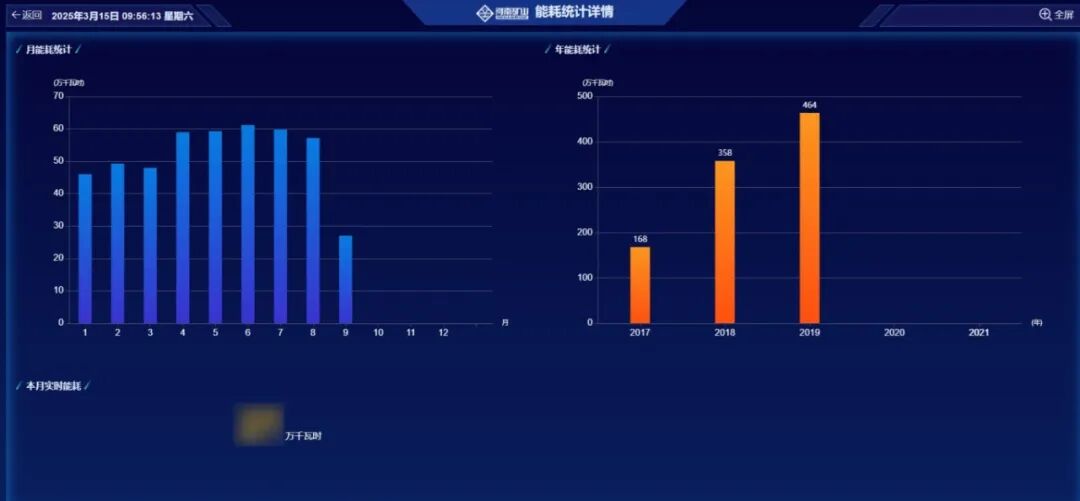
Table 1
| Lifting Weight | t | 5 | ||||||||
| Span | m | 10.5 | 13.5 | 16.5 | 19.5 | 22.5 | 25.5 | 28.5 | 31.5 | |
| Max Lifting Height | m | 20 | ||||||||
| Working Class | A6 | |||||||||
| Speed | Hoisting | min | 40.1 | |||||||
| Travelling Of Crab | 44.6 | |||||||||
| Travelling Of Trolley | 93.7 | 86.4 | ||||||||
| Main Size(mm) | BQ | 5704 | 5934 | 6500 | ||||||
| B | 4050 | 4050 | 5000 | |||||||
| BX | 2300 | |||||||||
| b | 230 | |||||||||
| K | 2000 | |||||||||
| H | 1893 | 1943 | ||||||||
| H3 | 2548 | 2608 | 2708 | 2858 | 3008 | 3108 | 3258 | 3408 | ||
| H1 | 765 | 815 | ||||||||
| S1 | 1600(1800) | |||||||||
| S2 | 1600 | |||||||||
| H2 | 128 | 228 | 328 | 478 | 628 | 728 | 878 | 1028 | ||
| h | 870 | |||||||||
| Max.Wheel Pressure | Indoor | KN | 81 | 90 | 96 | 104 | 112 | 124 | 132 | 144 |
| Outdoor | 86 | 94 | 101 | 109 | 117 | 128 | 138 | 148 | ||
| Steel track recommended | P43 | |||||||||
| Power Source | 3-Phase A.C 380V 50Hz | |||||||||
| Lifting Weight | t | 10 | ||||||||
| Span | m | 10.5 | 13.5 | 16.5 | 19.5 | 22.5 | 25.5 | 28.5 | 31.5 | |
| Max Lifting Height | m | 20 | ||||||||
| Working Class | A6 | |||||||||
| Speed | Hoisting | min | 40.1 | |||||||
| Travelling Of Crab | 44.6 | |||||||||
| Travelling Of Trolley | 93.7 | 86.4 | ||||||||
| Main Size(mm) | BQ | 5704 | 5934 | 6500 | ||||||
| B | 4050 | 4050 | 5000 | |||||||
| BX | 2300 | |||||||||
| b | 230 | 250 | ||||||||
| K | 2000 | |||||||||
| H | 2095 | 2185 | ||||||||
| H3 | 2550 | 2610 | 2760 | 2770 | 2920 | 3037 | 3220 | 3320 | ||
| H1 | 815 | 905 | ||||||||
| S1 | 1950(2150) | |||||||||
| S2 | 1650(1800) | |||||||||
| H2 | 130 | 230 | 380 | 380 | 530 | 680 | 830 | 930 | ||
| h | 720 | |||||||||
| Max.Wheel Pressure | Indoor | KN | 121 | 130 | 139 | 150 | 162 | 173 | 185 | 196 |
| Outdoor | 124 | 134 | 144 | 156 | 166 | 179 | 200 | 201 | ||
| Steel track recommended | P43 | |||||||||
| Power Source | 3-Phase A.C 380V 50Hz | |||||||||
| Lifting Weight | t | 16 | ||||||
| Span | m | 16.5 | 19.5 | 22.5 | 25.5 | 28.5 | 31.5 | |
| Max Lifting Height | m | 22 | ||||||
| Working Class | A6 | |||||||
| Speed | Hoisting | min | 41.8 | |||||
| Travelling Of Crab | 43.2 | |||||||
| Travelling Of Trolley | 89 | 87.3 | ||||||
| Main Size(mm) | BQ | 6744 | 7044 | |||||
| B | 4700 | 5000 | ||||||
| BX | 3500 | |||||||
| b | 250 | 300 | ||||||
| K | 2500 | |||||||
| H | 2373 | 2503 | ||||||
| H3 | 2774 | 2924 | 2944 | 3094 | 3194 | 3294 | ||
| H1 | 905 | 1035 | ||||||
| S1 | 2400(2600) | |||||||
| S2 | 2050(2250) | |||||||
| H2 | 394 | 544 | 564 | 714 | 814 | 914 | ||
| h | 760 | |||||||
| Max.Wheel Pressure | Indoor | KN | 207 | 221 | 233 | 244 | 255 | 263 |
| Outdoor | 211 | 224 | 237 | 250 | 260 | 268 | ||
| Steel track recommended | QU70 | |||||||
| Power Source | 3-Phase A.C 380V 50Hz | |||||||
| Lifting Weight | t | 20 | ||||||
| Span | m | 16.5 | 19.5 | 22.5 | 25.5 | 28.5 | 31.5 | |
| Max Lifting Height | m | 26 | ||||||
| Working Class | A6 | |||||||
| Speed | Hoisting | min | 48.6 | |||||
| Travelling Of Crab | 43.2 | |||||||
| Travelling Of Trolley | 87.3 | |||||||
| Main Size(mm) | BQ | 6944 | 7024 | |||||
| B | 5000 | |||||||
| BX | 4000 | |||||||
| b | 300 | |||||||
| K | 2500 | |||||||
| H | 2560 | |||||||
| H3 | 2646 | 2796 | 2946 | 3096 | 3196 | 3296 | ||
| H1 | 1055 | 1090 | ||||||
| S1 | 2600(2800) | |||||||
| S2 | 2300(2500) | |||||||
| H2 | 266 | 416 | 566 | 716 | 816 | 916 | ||
| h | 705 | |||||||
| Max.Wheel Pressure | Indoor | KN | 245 | 260 | 272 | 285 | 294 | 312 |
| Outdoor | 251 | 263 | 276 | 288 | 297 | 316 | ||
| Steel track recommended | QU70 | |||||||
| Power Source | 3-Phase A.C 380V 50Hz | |||||||
| Grab | Model | U | 113 | 109 | 110 | 105 | 106 | 101 | 102 | 127 | 123 | 124 | |||
| Type | Light | Medium | Heavy | Super heavy | Light | Medium | |||||||||
| Volume | m³ | 2.5 | 1.5 | 1 | 0.75 | 5 | 3 | ||||||||
| Density | t/m³ | ≤1 | >1-1.7 | >1.7-2.5 | >2.5-3.3 | ≤1 | >1-1.7 | ||||||||
| Main Size(mm) | Ba | 1634 | 1444 | 1238 | 1160 | 2060 | 1764 | ||||||||
| Bb | 2425 | 2175 | 2025 | 1875 | 2970 | 2670 | |||||||||
| Bc | 3120 | 2740 | 2900 | 2530 | 2690 | 2340 | 2500 | 3900 | 3430 | 3590 | |||||
| Grab | Model | U | 119 | 120 | 115 | 116 | 141 | 137 | 138 | 133 | 134 | ||
| Type | Heavy | Super heavy | Light | Medium | Heavy | ||||||||
| Volume | m³ | 2 | 1.5 | 8 | 4.8 | 3.2 | |||||||
| Density | t/m³ | >1.8-2.5 | >2.5-3.3 | ≤1 | >1-1.7 | >1.7-2.5 | |||||||
| Main Size(mm) | Ba | 1528 | 1416 | 2350 | 2087 | 1792 | |||||||
| Bb | 2470 | 2230 | 3515 | 3135 | 2915 | ||||||||
| Bc | 3220 | 3380 | 3920 | 3080 | 4380 | 4050 | 4250 | 3750 | 3950 | ||||
| Grab | Model | U | 129 | 130 | 155 | 151 | 152 | 147 | 148 | 143 | 144 | ||
| Type | Super heavy | Light | Medium | Heavy | Super heavy | ||||||||
| Volume | m³ | 2.5 | 10 | 6 | 4 | 3 | |||||||
| Density | t/m³ | >2.5-3.3 | ≤1 | ||||||||||
| Main Size(mm) | Ba | 1628 | 2478 | 2288 | 1892 | ||||||||
| Bb | 2665 | 3845 | 3546 | 3245 | 2745 | ||||||||
| Bc | 3430 | 3630 | 5000 | 4500 | 4720 | 4000 | 4220 | 3800 | 4020 | ||||

Fully Automatic/Semi-Automatic Cycles: The smart grab crane can automatically execute the entire sequence of grabbing, transporting, discharging, and returning to the standby position based on preset process routes or commands, requiring no manual intervention.
Significant Efficiency Gains: Leveraging advanced positioning modules and optimization algorithms, the equipment rapidly and accurately adapts to material handling requirements, minimizes idle time, and substantially boosts throughput and operational efficiency.
Intelligent Anti-sway: Employing advanced anti-sway control algorithms, the grab bucket effectively suppresses swaying during operation and lifting, shortens stabilization time, and improves the accuracy of material handling.
Precise Positioning: Combining laser positioning and AI visual recognition technologies, the grab bucket can accurately align and identify the shape of bulk material piles, enabling refined operations.
Reduce Human Risk: Achieves "unmanned" or "remote monitoring + minimally staffed" operation, freeing operators from harsh working environments with high dust, toxic and harmful substances, high temperatures, or high risks, thus reducing personal safety risks.
Active Collision and Anti-tilting: Equipped with infrared, laser, and ultrasonic anti-collision systems, as well as tilt sensors, it effectively prevents collisions between the crane and surrounding objects, and prevents improper operations such as tilting or skewing, ensuring the safety of equipment and the plant.
Equipment Lifecycle Monitoring: A built-in safety monitoring system collects core data in real time, including crane start-up frequency, running time, motor current and voltage, and lifting weight.
Intelligent Early Warning and Decision-Making: Leveraging IoT and big data technologies, the system centrally stores and analyzes the collected data, helping management to promptly identify potential faults, issue risk warnings, and optimize equipment scheduling.
Reduced Overall Costs: On the one hand, automation reduces labor costs; on the other hand, optimized crane trolley and overall structural design result in a lighter overall weight and lower wheel pressure, thereby reducing construction costs for infrastructure such as factory buildings.
Green and Energy-Saving: Modern intelligent cranes are more environmentally friendly in motor selection, energy feedback, and variable frequency speed control, aligning with the development trend of green industry.
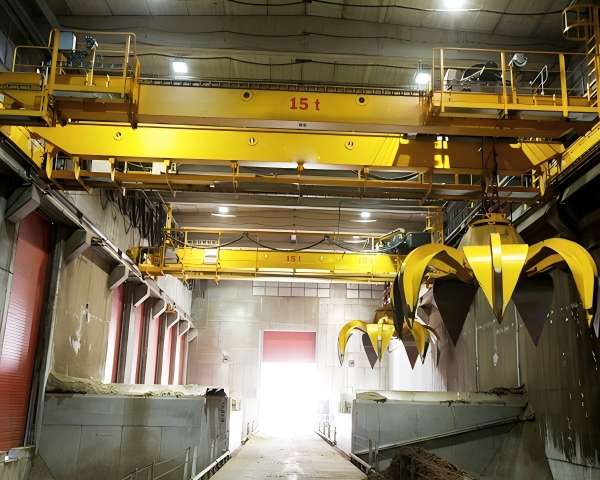
Working Object: Municipal solid waste.
Specific Application: Installed above the waste storage pit in a waste incineration plant. Responsible for unloading, stacking, turning, homogenizing, and mixing waste (mixing newly added high-moisture waste with aged waste to adjust calorific value), and finally, precisely feeding the waste into the incinerator.
Intelligent Value: The waste pit environment is harsh and odorous, making traditional manual operation extremely arduous. The smart grab crane uses 3D laser scanning to generate a material level map, enabling fully automated, unattended grabbing and feeding, significantly improving the working environment and ensuring uniform and continuous combustion in the incinerator.
Working Objects: Scrap steel, pig iron blocks, blast furnace slag, steel slag, etc.
Specific Applications: Scrap/Scrap Steel Handling: Utilizing high-power hydraulic grabs to grab, classify, and transfer various irregular scrap steel pieces, loading them into hoppers or electric furnaces. Slag Processing: Automatically grabbing, cleaning, and transferring high-temperature, high-humidity smelting slag near blast furnaces or slag pools in steel plants.
Intelligent Value: Scrap steel is highly irregular in shape and prone to overload or swaying. Intelligent cranes, through anti-sway control and precise positioning, effectively reduce equipment wear and achieve efficient and safe heavy-duty handling.
Working Objects: Bulk materials such as coal, ore, sand, fertilizer, and grain.
Specific Applications: Used in port terminals, inland river freight yards, or coal yards of large thermal power plants for unloading ships, material storage and retrieval in freight yards, and rapid loading onto trains/trucks.
Intelligent Value: Facing the massive influx and outflow of bulk cargo, smart grab cranes can work with WMS (Warehouse Management System) to automatically generate the most efficient loading and unloading routes, significantly reducing ship dwell time in port and improving turnover efficiency.
Objects handled: Cement clinker, chemical raw materials, grain crops, and even distiller's grains or pickle residues, etc.
Specific applications: In enclosed or semi-enclosed indoor silos, specific bulk materials are stacked, batched, and transported. For example, leveling and releasing grains in large grain depots; using special stainless steel grabs to grab and mix distiller's grains in breweries.
Intelligent value: Meets the stringent standards of special industries (such as explosion-proof, food-grade corrosion-resistant, or fully enclosed dust-free environments), avoiding material contamination and the risk of human contact.
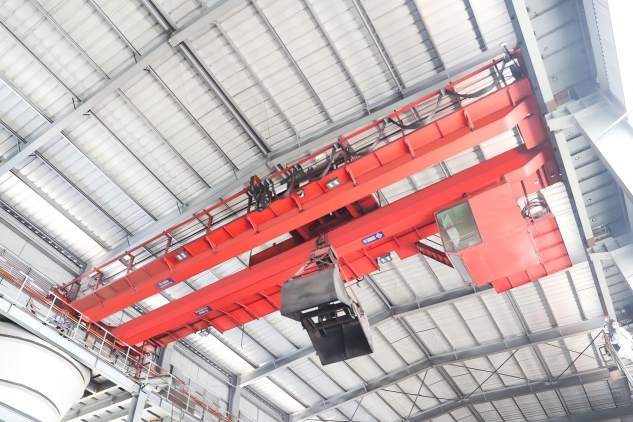
The core requirements of the cement industry for smart grab cranes are focused on functionality and performance. They need to be adapted to unmanned material handling scenarios in cement kilns, and the equipment needs to have automatic grabbing and unloading capabilities, path planning capabilities, while ensuring stable operation, improving material feeding efficiency, and reducing manual input.
Standards for the solid and hazardous waste disposal industry place greater emphasis on safety performance and reliability. Equipment must feature high protection ratings and utilize enclosed grabs to prevent leakage; additionally, remote control capabilities are required to isolate operators from hazardous environments and ensure operational safety.
Metallurgical operations involve high temperatures, heavy loads, and high dust levels. Consequently, equipment standards mandate high-temperature and wear resistance; grabs must be constructed from heat-resistant steel, and motors require high protection ratings. Furthermore, the systems must support remote control and fully automated operation to isolate personnel from high-temperature, high-risk environments.
Equipment adapted for the chemical industry strictly adheres to standards regarding explosion protection, corrosion resistance, and leak prevention. It incorporates explosion-proof electrical systems and leak-proof grab structures to prevent direct human contact with toxic or hazardous materials, while leveraging high-precision positioning capabilities to ensure the continuous, safe operation of chemical production processes.
In recent years, Henan Mine Crane has intensified its R&D efforts for intelligent, eco-friendly, and lightweight cranes, deploying a large number of premium products across key sectors such as iron and steel smelting, aerospace and shipbuilding, and petrochemicals. This strategic partnership with Guangxi Chiji Iron & Steel—aimed at driving industrial transformation and jointly establishing a metallurgical new materials (steel) production base with an annual capacity of ten million tons—not only showcases Henan Mine Crane’s prowess in innovation but also lays a solid foundation for deep collaboration between the two parties in areas such as technological innovation.
