Model CD1, single speed wire rope electric hoist is small-sized lifting equipment, which can be mounted on single beam, overhead, gantry and jib cranes, with slight modification; it can also be used as a winch.
MORE
HOT PRODUCTS

Model CD1, single speed wire rope electric hoist is small-sized lifting equipment, which can be mounted on single beam, overhead, gantry and jib cranes, with slight modification; it can also be used as a winch.
MORE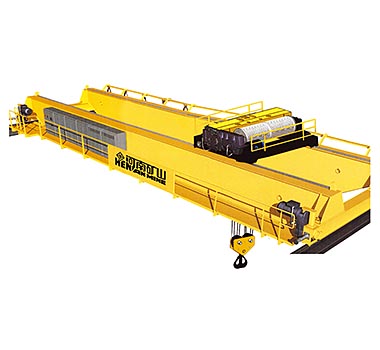
HNKS Crane Co., Ltd is one of Chinese leading manufacturers of many kinds’ cranes. Such as overhead Crane, gantry crane, European crane, tire rubber crane, metallurgy crane, portal crane, jib crane, electric hoist, grab bucket, etc.Welcome to Changyuan ...
MORE.jpg)
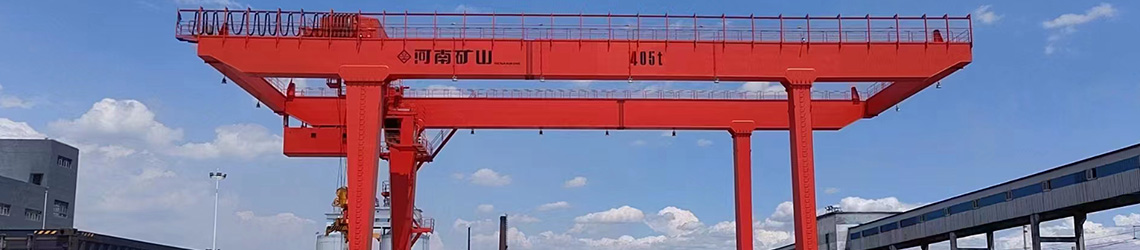
Gantry Crane actually is overhead crane with legs, it’s normally worked outdoors, and also sometimes indoors
MORE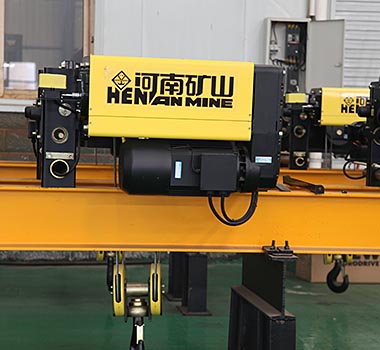
European wire ripe electric hoist adopts the European FEM design standards with advanced concept, the operation is simple, convenient and working is safety and efficient and meet the low noise, energy conservation and environment protection requiremen...
MOREIntelligent Warehousing Crane For Steel Plate Handling | Henan Mine Crane
2026-08-12
In the steel structure industry, the warehousing and circulation of steel plates has long faced four major challenges: excessive reliance on manual labor, low sorting efficiency, discrepancies between inventory records and actual stock, and high losses due to bumps and knocks during handling.
To completely resolve these pain points, the core objective of this collaboration is to create a fully automated, high-precision intelligent sorting and panoramic visualization management system for steel plate warehousing. The project aims to streamline every operational step from "inbound to outbound," achieving deep end-to-end automation, thereby powerfully empowering enterprises to expand future production capacity and enhance product quality.
To precisely meet this strategic need, Henan Mine Crane has customized a intelligent warehousing crane for steel plate handling. The full deployment of this equipment will revolutionize and reshape traditional warehousing operation models.
.jpg)
2. Technological Parameter
| Clean Weight | t | 15 | 25 | 30 | ||
| Working Class | A6 | |||||
| Span | m | 34.3 | 46.3 | 53.3 | ||
| Max Lifting Height | m/min | 5.5 | 5 | 5 | ||
| Speed | Lifting | 12.2 | 11.8 | 12 | ||
| Travelling | Travelling of Grab | 38.7 | 38 | 40.8 | ||
| Travelling of Trolley | 82.5 | 82.5 | 82.5 | |||
| Hang Beam | Revolve | r/min | 1 | 1 | 1 | |
| Flexible | m/min | 5/10 | 5/10 | 5/10 | ||
| Main Dimensions(mm) | H | 3850 | 3860 | 4350 | ||
| H1 | 1000 | 1000 | 1000 | |||
| H3 | 2750 | 3300 | 2900 | |||
| H4 | 4250 | 4600 | 4300 | |||
| K | 4500 | 5500 | 5500 | |||
| BQ | 10800 | 12100 | 12500 | |||
| B | 6300 | 7500 | 8000 | |||
| b | 400 | 400 | 400 | |||
| B1 | 2250 | 2300 | 2250 | |||
| B2 | 2250 | 2300 | 2250 | |||
| S1 | 2600 | 2600 | 2700 | |||
| S2 | 2800 | 2800 | 2850 | |||
| Max. Wheel Pressure | KN | 220 | 325 | 410 | ||
| Steel Track Recommended | QU100 | |||||
| Power Source | 3-Phase A.C 380V 50Hz | |||||
l Vehicle Recognition Technology: Automatically and accurately identifies the location of transport vehicles and flatbed trucks entering and leaving the warehouse, providing precise coordinate alignment for subsequent unmanned automated loading and unloading.
l Steel Plate Intelligent Recognition: Integrates machine vision and barcode/RFID recognition technologies to achieve automated and efficient verification of steel plate material, specifications, thickness, and batch.
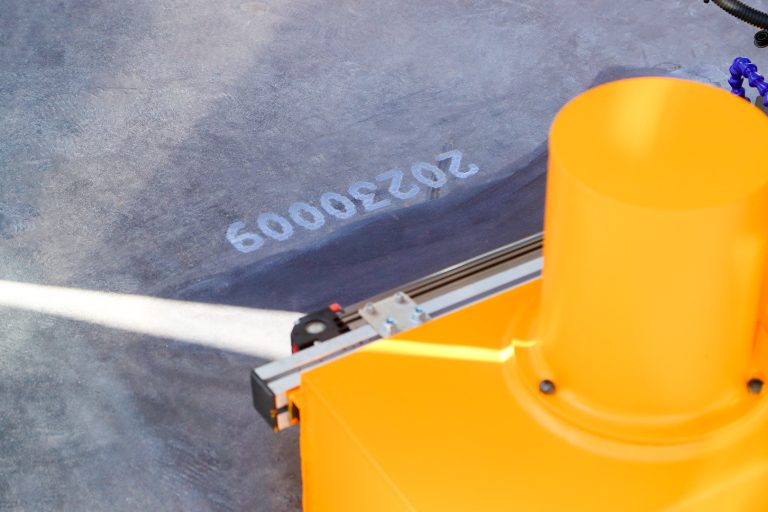
l Automatic Marking System: During the steel plate circulation process, the system automatically applies markings (such as barcodes, steel grades, batch numbers, etc.) according to instructions, ensuring traceability throughout the steel plate's lifecycle.
l 5G Millimeter Wave Communication: Utilizes 5G and millimeter wave technologies to build an ultra-low latency, high-bandwidth industrial wireless communication network, ensuring lossless transmission of massive control commands and high-definition video data within seconds.
l Large Vehicle Collision Avoidance System: A multi-level safety protection mechanism (including lidar, ultrasonic sensors, and mechanical anti-collision switches) monitors the distance between multiple cranes spanning the same area in real time, effectively preventing collision accidents.
l High-precision walking and positioning: The crane adopts a combination of absolute encoder and laser rangefinder control to ensure millimeter-level repeatability positioning accuracy during long-span and long-distance operation.
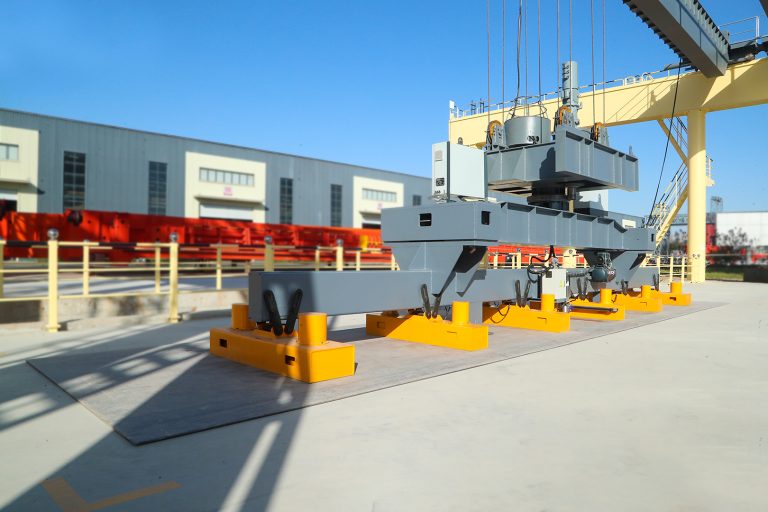
The full automatic electromagnet overhead crane for steel plate handling
breaks away from the limitations of traditional overhead cranes that rely on manual hooking and command, achieving fully automated, unmanned intelligent operation:
l Automatic Unloading: Precisely connects to external transport vehicles to automatically grab and safely unload heavy-duty steel plates.
l Automatic Rotation: Equipped with an intelligent rotating spreader, it can rotate steel plates at any horizontal angle in the air, meeting stacking and feeding needs in different directions.
l Automatic Sorting: Based on production order requirements, it intelligently retrieves and optimizes the sorting of inventory steel plates before they are shipped out.
l Automatic Palletizing: Based on the size, thickness, and weight parameters of the steel plates, it performs standardized and flat automated stacking operations to prevent deformation.
l Automatic Tilting: Supports automatic flipping and repositioning of steel plates under complex working conditions, completely solving the pain points of low efficiency and high safety risks associated with manual pallet flipping.
| Crane Type | Most Suitable | Typical Load | Typical Aisle Width |
| Stacker Crane | High-rise automated storage and retrieval system | Pallets, weighing several tons | 1.4-1.8 m |
| Small Loading Crane | Small parts, cardboard boxes, cartons | Light load, less than approximately 500 kg | 0.8-1.2 m |
| Double-Deep Stacker | High-density layout, deeper racks | Tray | 1.4-1.8 m |
| Multi-Shuttle Crane System | High-throughput distribution center | Hybrid, high circulation rate | It varies depending on the situation (based on shuttle bus). |
| Customized Solutions | Oversized or non-standard goods | Variable | Variable |
(1) Automatic Positioning and Operation
One of the core advantages of full automatic electromagnet warehousing crane for steel plate handling is precise automatic positioning. During operation, after the system issues a command, the crane automatically identifies its own position using laser positioning, encoders, and other equipment, and then precisely moves along a preset route to the designated picking point. The entire process requires no manual intervention, and the positioning error can be controlled within 5 millimeters.
(2) Load Identification and Processing
The system achieves accurate material identification and safe operation through multi-dimensional sensing technology:
Weight Dimension: Equipped with high-precision pressure and tension sensors, it detects the load weight in real time, automatically determines whether there is overload or off-center loading, and triggers the limiting protection.
Shape Dimension: Visual sensors scan the size and shape of the materials, automatically matching the opening and closing degree of the lifting device and the lifting height.
Information Dimension: Integrating RFID radio frequency identification, 1D/2D barcode scanning, and visual recognition technology, it quickly reads material batch, SKU, and storage location information, eliminating problems such as incorrect lifting, misplacement, and mixed materials from the source.
(3) Integration with Warehouse Software
The intelligent warehousing crane for steel plate handling is not a standalone device but seamlessly integrates with Warehouse Management Systems (WMS), Manufacturing Execution Systems (MES), Enterprise Resource Planning (ERP), and Supervisory Control and Data Acquisition (SCADA) systems. After the upper-level systems issue inbound, outbound, transfer, and inventory control instructions, the crane automatically parses and executes the tasks. Upon completion, it transmits results back in real time, forming a digital process of instruction-execution-feedback-closed loop, achieving unified data across warehousing, production, and scheduling.
(4) Data Feedback and Monitoring
Equipped with an edge computing terminal, the crane collects core data such as operating speed, location, load, voltage, and motor status in real time and uploads it synchronously to the management platform. Managers can view the equipment's operating trajectory, operation frequency, load curve, and task progress in real time through a visual interface. When faults such as sensor malfunctions, motor overload, positioning deviations, or communication interruptions occur, the system triggers a dual alarm (audio-visual + platform alarm) within seconds, accurately pushing the fault location, cause, and handling suggestions. Operating data is automatically archived, supporting predictive maintenance, operational efficiency analysis, and energy consumption optimization, realizing a shift from "reactive maintenance" to "preventative maintenance."
8. Key Technologies for Intelligent Warehousing Crane
(1) PLC Intelligent Control System
The Programmable Logic Controller (PLC) is the core control unit of the system, equivalent to the nerve center of the equipment. It integrates a high-speed CPU, motion control module, and safety logic module, processing commands for positioning, speed adjustment, anti-swaying, and safety protection in real time, completing logical judgments, signal acquisition, and action output. Combined with dedicated motion control algorithms, it achieves coordinated control of the trolley, crane, and hoisting mechanism, with a response speed of milliseconds, ensuring precise, smooth, and stable movements, forming the fundamental core of automated operations.
(2) Sensors and Positioning Technology
Positioning technology directly determines the reliability of automation. Mainstream solutions employ three-level positioning redundancy:
Absolute Positioning: Laser rangefinder for long-distance, high-precision positioning.
Incremental Positioning: Rotary encoder to record displacement and correct position in real time.
Limit Protection: Mechanical/electronic limit switches for extreme position safety protection. Simultaneously, pressure sensors, vision sensors, and tilt sensors are used to build a comprehensive sensing network, providing reliable data input for the control algorithm.
(3) Remote Monitoring and IoT Connectivity
Based on Industrial Internet of Things (IIoT) and 5G/Industrial Ethernet communication technologies, the crane achieves fully networked operation. Management personnel can remotely monitor, debug, and diagnose faults via PCs, mobile devices, and large-screen terminals without needing to be physically present on-site. Equipment data is stored and analyzed in the cloud, supporting centralized management of multiple warehouses and cross-regional scheduling, significantly reducing on-site management costs.
(4) Anti-sway and Precise Control
Addressing industry pain points such as easily swaying and unstable positioning of hoisted materials, the system is equipped with active anti-sway control technology: Inertial sensors detect the sway angle and amplitude of the hoisted object in real time, and algorithms quickly calculate compensation parameters, automatically adjusting the acceleration, deceleration, and start/stop rates of the trolley/gantry to dynamically counteract inertial sway. Combined with servo drives and variable frequency closed-loop control, it achieves smooth, impact-free lifting and translation, avoiding material collisions and cargo displacement, significantly improving operational safety and storage efficiency.
(5) Artificial Intelligence and Data-Driven Optimization
AI technology deeply empowers crane operation and management optimization:
Predictive Maintenance: By analyzing vibration, temperature, and current data through AI models, the lifespan of components such as bearings, motors, and wire ropes can be predicted in advance, reducing unplanned downtime.
Intelligent Path Optimization: Based on historical operation data, the shortest path and minimum waiting time are dynamically planned to improve the efficiency of single-machine operation.
Intelligent Operation Analysis: Automatically calculates workload, energy consumption, and efficiency, generating reports to support continuous optimization of warehousing processes.
(1) Improved Space Utilization
High-Density 3D Storage: Overhead cranes are typically installed on fixed tracks at the top of the warehouse, fully utilizing the building's vertical space to achieve multi-level high-bay racking storage.
Optimized Ground Occupancy: Due to its “aerial operation” mode, it eliminates the need for wide forklift aisles, significantly increasing storage capacity per unit area.
(2) Improved Operational Efficiency
24/7 Continuous Operation: The system supports fully automated, unattended continuous operation, rapidly responding to production orders and significantly shortening inbound and outbound cycles.
Intelligent Scheduling and Path Optimization: Through deep integration with Warehouse Management Systems (WMS) and Warehouse Control Systems (WCS), the cranes can automatically plan the optimal operating path based on task priority, enabling collaborative operation of multiple machines and avoiding congestion.
(3) High Safety
Anti-Sway and Precise Positioning: Employing advanced electronic anti-sway technology, laser/vision positioning, and high-precision encoders, it effectively suppresses the inertial sway of heavy objects during operation, achieving positioning accuracy typically down to the millimeter level.
Intrinsic Safety (Reduces Human-Induced Accidents): Frees operators from high-risk working environments such as high temperatures, dust, cold storage, or heights (remote control or fully automated operation is possible), avoiding personal injury and cargo damage caused by blind spots or fatigue.
Multiple Safety Protections: Equipped with overload protection, fall protection, collision detection, and area restriction (virtual wall) functions, providing comprehensive protection for equipment and property.
(4) Achieved Refined Management
High Data Consistency: Every grab, movement, and storage of goods is automatically recorded by the system. Combined with barcode, RFID, or visual recognition technology, real-time synchronization and full lifecycle traceability of inventory data are achieved.
Reduced Overall Operating Costs: Significantly reduces reliance on traditional forklifts and frontline operators, lowering long-term labor costs, equipment wear and tear, and economic losses due to human error.
(5) Powerful Expandability
Customized Fixture Expansion: Customized hydraulic clamps, electromagnetic chucks, or specialized lifting tools can be installed based on the physical characteristics of different materials (e.g., steel coils, plates, paper rolls, refrigerated containers, bulk cargo, etc.).
Seamless integration with smart factories: As part of the Industrial Internet of Things (IIoT), the system can be integrated with upper-level ERP and MES systems, supporting equipment health status monitoring and predictive maintenance, laying the foundation for building a green and digital smart factory.
| Comparison Dimensions | Intelligent Warehousing Crane | Traditional Cranes |
| Core Applicable Scenarios |
1. Large warehouse size, high space utilization requirements.
2. Extremely high operational frequency, requiring 24/7 continuous operation. 3. Fixed material flow rules (clear routes and pickup points).
|
1. Low-frequency operation scenarios such as small spare parts warehouses and small processing plants. 2. Non-standard environments with complex and variable operating procedures. |
| Material and process adaptability | 1. For heavy-duty material handling with relatively uniform specifications and fixed routes. 2. Customized fixtures can be used to adapt to specific bulk materials (such as steel coils, paper rolls, etc.). |
1. The materials are diverse in type and specifications. 2. The lifting route is not fixed, requiring extremely high manual dexterity. |
| Accuracy and Management Requirements | 1. High precision is required, necessitating millimeter-level positioning (such as anti-shake control). 2. Deep integration of WMS/WCS is essential for achieving synchronized accounting and physical inventory, and end-to-end digital tracking. |
1. Primarily focused on basic hoisting and handling. 2. There is no rigid demand for sophisticated inventory management and automated system traceability. |
| Economy and cost-effectiveness | While the initial investment is large, it can significantly reduce labor costs and lower overall operational losses in the long run. | With low initial investment, it is more cost-effective for customers with limited budgets who cannot afford high-cost automation upgrades. |
| Security and personnel dependence | Achieving unmanned or remote control liberates personnel from high-risk and harsh environments, resulting in inherently high safety. | It relies heavily on manual operation and is greatly affected by the operator's line of sight and fatigue level, posing certain safety hazards. |
Intelligent cranes, with their advantages of automation, intelligence, and unmanned operation, have expanded their application scope from traditional industrial manufacturing to multiple industries, including major engineering construction, modern logistics warehousing, and special high-risk environments.
In major engineering construction fields such as port container terminals, large-scale road and bridge projects, municipal engineering, and water conservancy and hydropower projects, intelligent cranes, through high-precision positioning and intelligent control systems, achieve efficient and accurate material hoisting and component installation, ensuring project safety and quality.
In the industrial manufacturing sector, intelligent cranes are widely used in metallurgical workshops, heavy manufacturing workshops, automobile manufacturing and assembly lines, and automated production lines for sail-like equipment, optimizing material flow in workshops through unattended operation, automatic path planning, and material transfer systems.
In the logistics and special fields, intelligent cranes are core equipment in intelligent automated warehouses, enabling unmanned warehousing scheduling and handling; simultaneously, in harsh environments or places with safety risks, such as waste-to-energy plants, hazardous waste treatment facilities, chemical plants, and coal bunkers, their unmanned and automated characteristics can replace manual labor, ensuring safety. In special working conditions such as nuclear waste transfer and high-radiation contamination sites, the unmanned and automated operation of intelligent cranes has become a necessity, ensuring safe and reliable operations through remote monitoring and automatic path planning technologies.
The application of intelligent cranes has yielded significant results, specifically in improving operational efficiency, reducing labor costs, increasing space utilization, and effectively ensuring operational safety through high-precision positioning, safety warnings, and remote monitoring.
Industry competition has moved beyond simple price wars, shifting towards a contest of comprehensive strengths including lightweight structural design, intelligent control systems, adaptability to special working conditions, and full-cycle operation and maintenance services.
Development trends are characterized by intelligentization and automation, lightweighting and greening, and digital transformation. Intelligent cranes are the result of combining artificial intelligence technology with basic automation, wireless communication, detection and sensor technology, and information technology, representing the application direction of the intelligent manufacturing era.
The development goal is to achieve a higher degree of automated control, such as reducing operators by 40%-50%, increasing automation levels by 50%-60%, and expanding product lines for special scenarios such as explosion-proof, metallurgy, and cleanroom applications.
Intelligent cranes not only improve the automation level of industrial production but also provide operators with a safer and more efficient working environment. With technological advancements, they will be widely used in more fields, becoming an important trend in future industrial development.
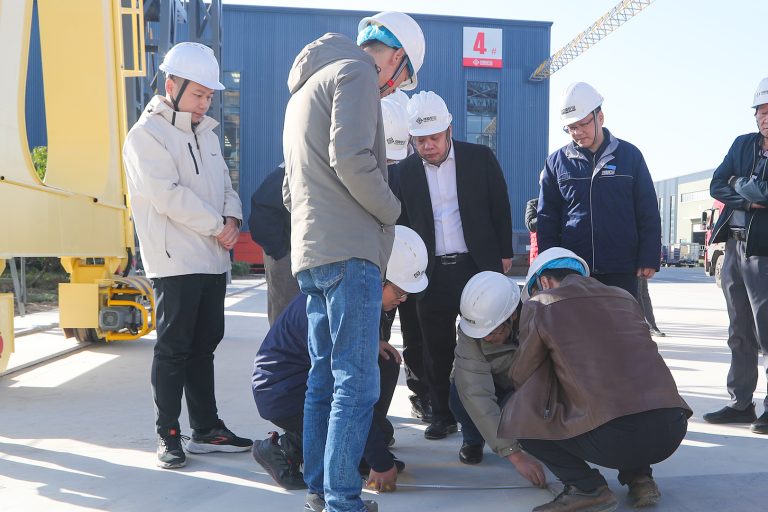
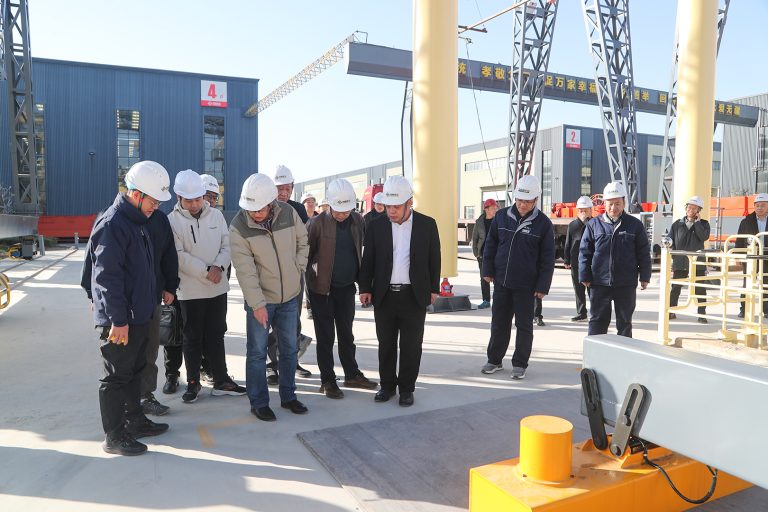
The successful completion of the experiment is only the starting point for intelligent applications. In the wave of digital transformation in manufacturing, warehousing is no longer just a simple storage of materials but a key hub connecting production, scheduling, and inventory management. Intelligent warehousing crane for steel plate handling have broken through the limitations of traditional overhead crane, no longer merely performing handling and hoisting functions, but becoming a central hub for warehousing, integrating handling, identification, traceability, scheduling, and monitoring. The successful trial of this customized equipment by Henan Mine Crane confirms the development trend of heavy-duty lifting equipment towards intelligence and integration, and also provides new ideas for the construction of smart warehouses for more enterprises. Henan Mine Crane will continue to refine its intelligent lifting technology and continuously empower the high-quality development of the real economy manufacturing industry.
