Model CD1, single speed wire rope electric hoist is small-sized lifting equipment, which can be mounted on single beam, overhead, gantry and jib cranes, with slight modification; it can also be used as a winch.
MORE
HOT PRODUCTS

Model CD1, single speed wire rope electric hoist is small-sized lifting equipment, which can be mounted on single beam, overhead, gantry and jib cranes, with slight modification; it can also be used as a winch.
MORE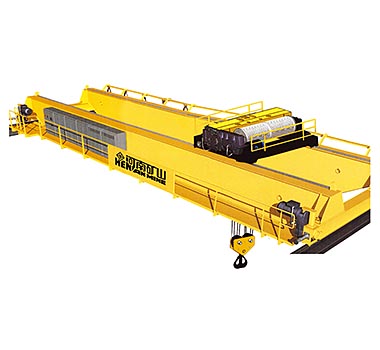
HNKS Crane Co., Ltd is one of Chinese leading manufacturers of many kinds’ cranes. Such as overhead Crane, gantry crane, European crane, tire rubber crane, metallurgy crane, portal crane, jib crane, electric hoist, grab bucket, etc.Welcome to Changyuan ...
MORE
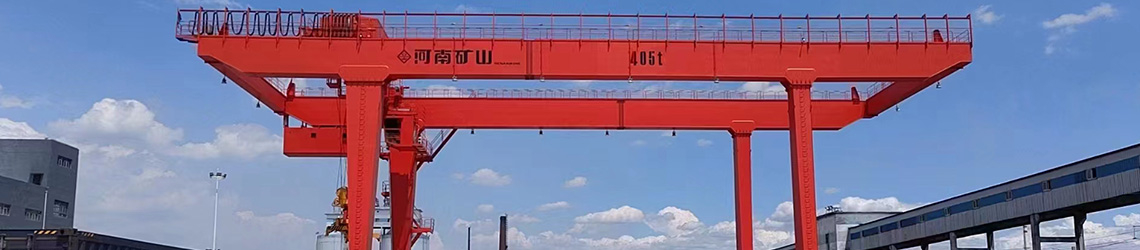
Gantry Crane actually is overhead crane with legs, it’s normally worked outdoors, and also sometimes indoors
MORE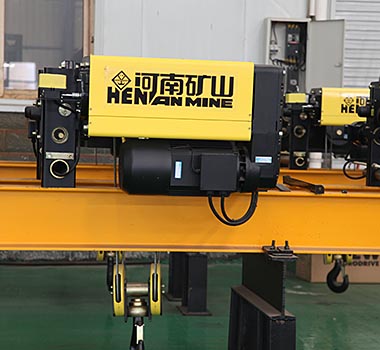
European wire ripe electric hoist adopts the European FEM design standards with advanced concept, the operation is simple, convenient and working is safety and efficient and meet the low noise, energy conservation and environment protection requiremen...
MOREDouble-Girder Gantry Cranes Used in Metro Tunnel Construction | Henan Mine Crane
2023-06-23
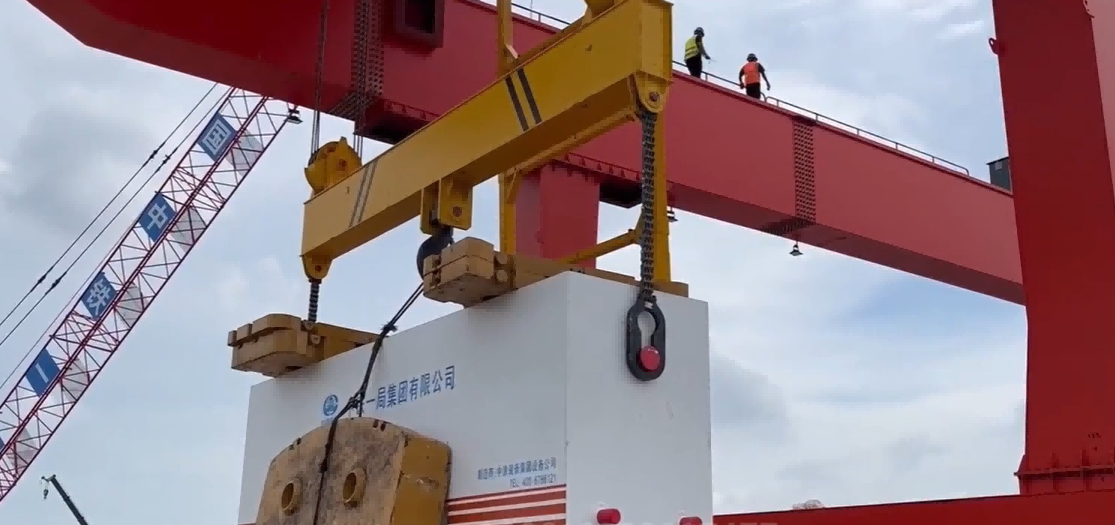
The Guangzhou-Foshan Ring Line, an intercity railway in Guangzhou, China, is a key part of the Pearl River Delta intercity rail transit network. At the project site, two sets of 100-ton double-girder gantry cranes for metro muck handling, manufactured by Henan Mine, are used to lift construction spoil and materials during metro construction. They are among the large-tonnage complete crane sets currently used in this field across China.
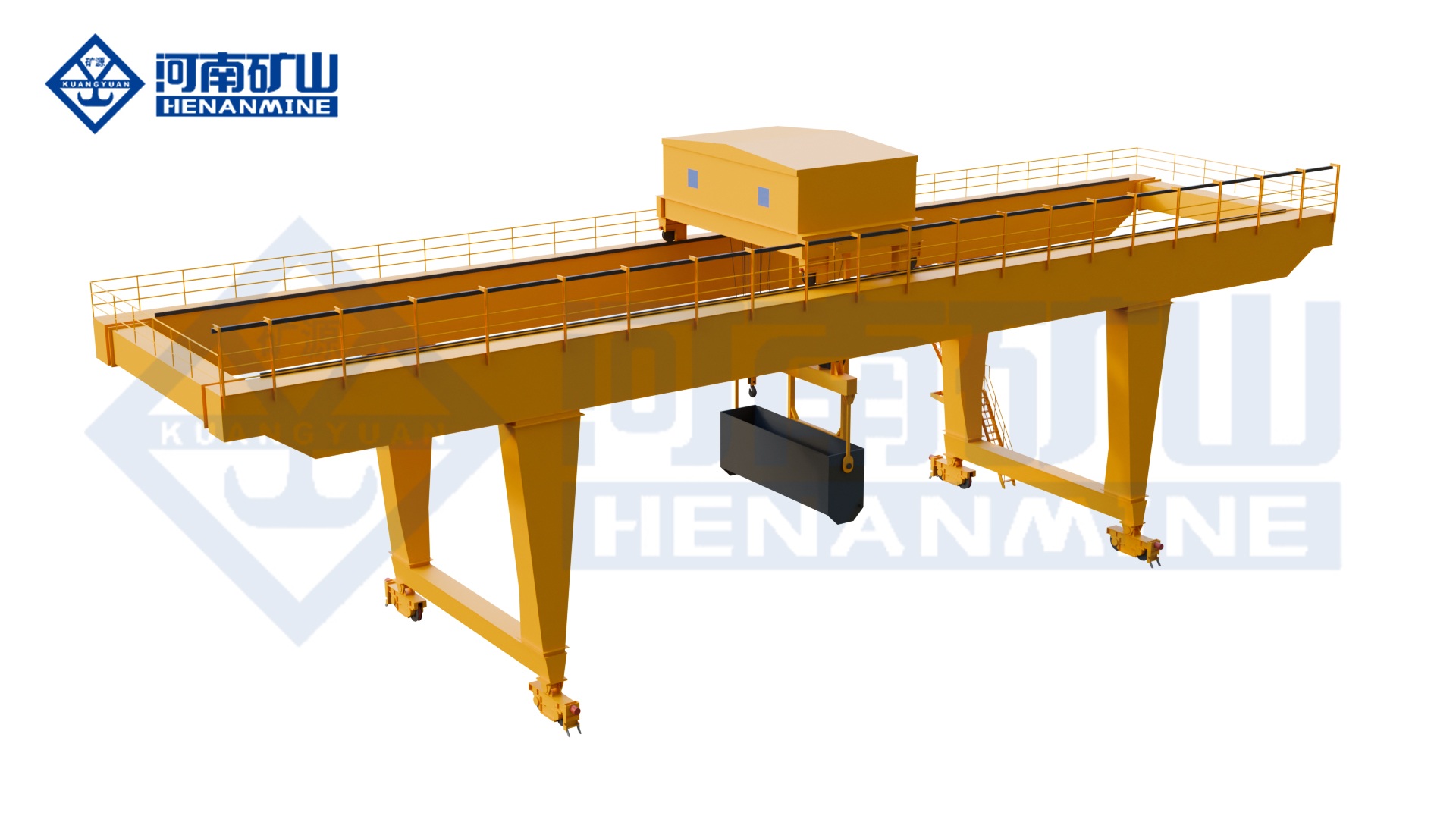
Double-girder gantry cranes used in metro tunnel construction are specialized lifting equipment designed specifically for subway construction—also known as a muck-removal gantry crane—and is primarily used for hoisting and dumping excavated material (muck) and lifting tunnel segments during subway tunnel construction. It typically features a lifting capacity of 45–50 tons, a lifting height of up to 100 meters, and generally operates under heavy-duty service conditions.
|
01 |
Aligning with the trend toward green industrial development, this batch of cranes was custom-engineered to meet specific project requirements and operational conditions, featuring below-rail lifting gear capable of reaching depths of up to 40 meters. |
|
02 |
The mast structure has been optimized through computer-aided design and analysis, resulting in a more rational overall machine configuration. Rigorous inspection controls and superior manufacturing processes ensure product quality. |
|
03 |
Safety protection devices have been incorporated into key operations of the entire machine—such as traveling and lifting—ensuring safer, more efficient, and more reliable performance. |
|
Project/Name of Organization |
Main lifting |
Project/Name of Organization |
handcart travel |
cart travel |
||||
|
Lifting Weight |
t |
75 |
Gauge |
mm |
9000 |
30000 |
||
|
Lifting speed |
m/mim |
1/10 |
Running speed |
m/min |
2/20 |
3/30 |
||
|
Working-level |
M6 |
Working-level |
M6 |
M6 |
||||
|
Maximum lifting height |
m |
Upper 10 Lower 16.5 |
Based distance |
mm |
3560 |
11740 |
||
|
Power supply |
Three-phase AC 50Hz 380V |
|||||||
|
Wire Rope |
Structure |
6W(19)-30-170I |
Buffer stroke |
mm |
100 |
140 |
||
|
Count |
2×6 |
Rail Model |
P43 |
50Kg/m |
||||
|
Working Rally |
KN |
72.5 |
Wheel diameter |
mm |
Φ600 |
Φ600×16 |
||
|
Reel diameter |
mm |
Φ800 |
Maximum wheel pressure |
KN |
285 |
248 |
||
|
Electric motor |
Model |
YZP400L1-10 |
Electric motor |
Model |
YZP160M1-6 |
YZP160L-6 |
||
|
Power |
KW |
160 |
Power |
KW |
2×5.5 |
4×11 |
||
|
Speed |
r/min |
585 |
Speed |
r/min |
970 |
945 |
||
|
Reducer |
Model |
ZQA1000-i-3C |
Reducer |
Model |
ZSCA600-i-5/6 |
ZSC(A)600-i-1/2 |
||
|
Speed ratio |
i |
25 |
Speed ratio |
i |
77.5 |
59 |
||
|
Brake |
Model |
YWZ4-500/E201 |
Brake |
Model |
YWZ-200/25 |
YWZ4-200/T40 |
||
|
Braking torque |
N.m |
2×3600 |
Braking torque |
N.m |
2×200 |
4×720 |
||
|
Limit switch |
DXZ |
Limit switch |
LX10-11 |
|
||||
Higher load-bearing capacity: With two main girders sharing the load, the capacity is significantly superior to that of a single-girder design, making it suitable for lifting fully loaded muck skips and shield tunnel segments weighing over ten tons.
High rigidity and minimal deformation: Significant impact loads occur during lifting and dumping; the dual-girder structure offers high rigidity, ensuring the crane remains stable without excessive swaying, while also providing greater assembly precision and durability.
Excellent stability and wind resistance: Subway construction often takes place in open-air or temporary site environments; the dual-girder structure features a more stable center of gravity and offers robust resistance against wind and off-center loads.
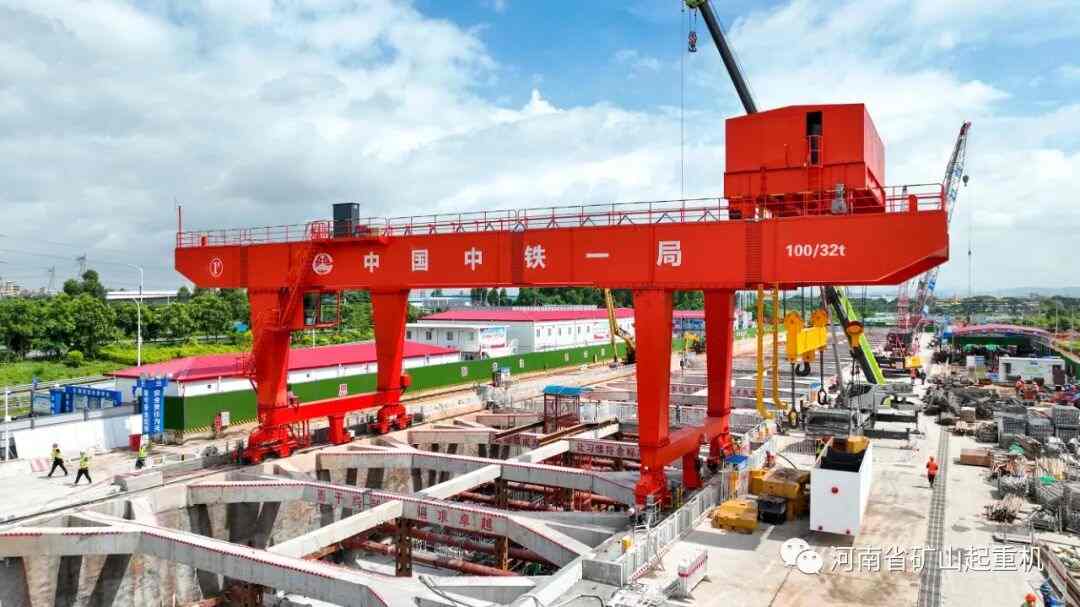
|
Gantry frame |
The "skeleton" of the entire machine consists of the main beam, outriggers, and lower crossbeam. Depending on the dumping direction, the outrigger structure comes in two types: A-frame and U-frame. A-frame outriggers are typically used for fixed, unidirectional muck discharge, whereas U-frame outriggers provide more clearance for muck bucket dumping and the movement of muck trucks, making them suitable for more flexible operating conditions. |
|
Trolley |
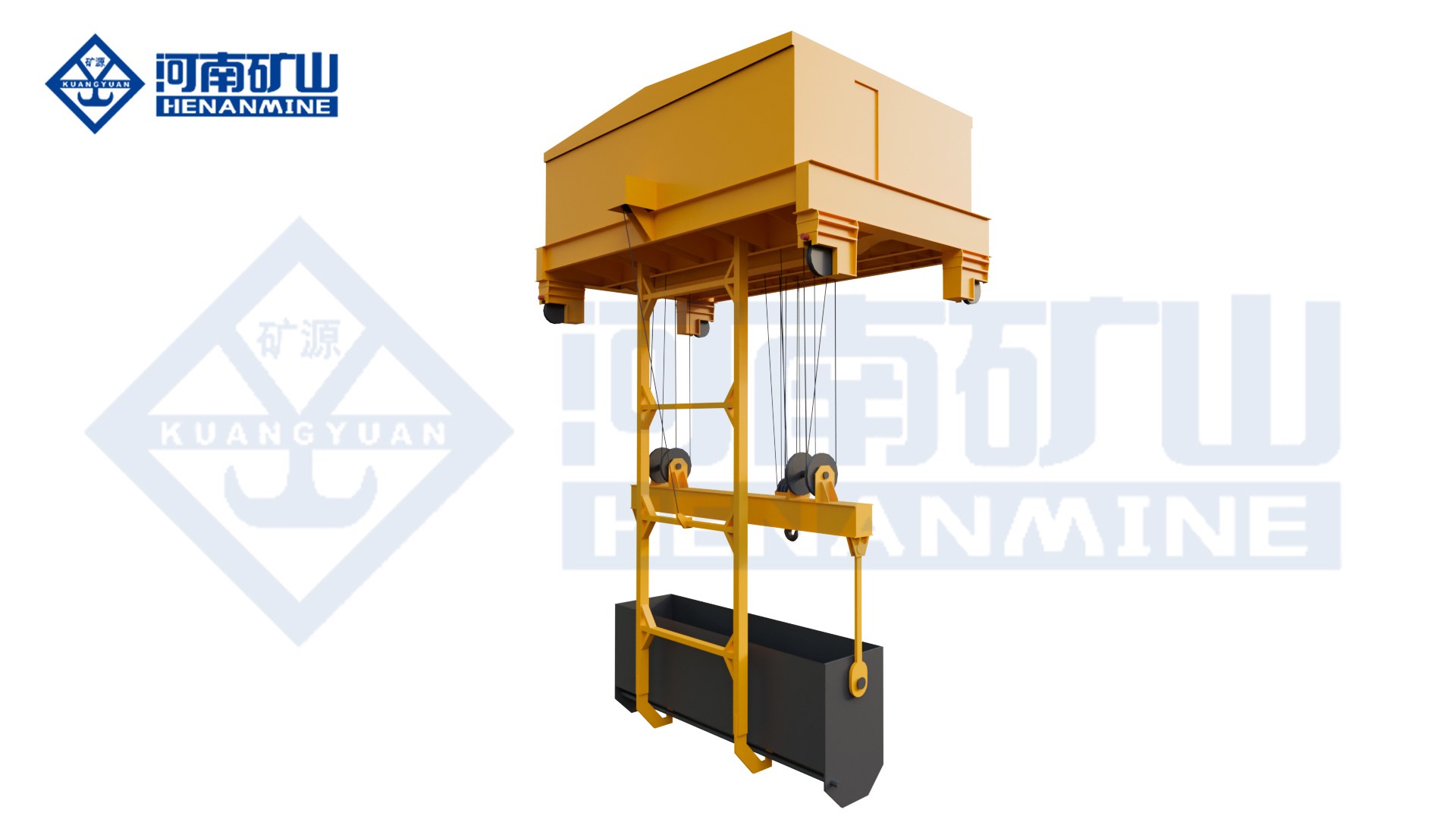
Hoisting mechanism: Responsible for lifting materials such as muck skips and tunnel segments; it utilizes a lifting beam as the rigging device, with a freely rotating hook mounted at the center of the beam. |
|
Trolley travel mechanism: Responsible for moving the suspended load laterally along the main girder. |
|
|
Hydraulic tipping mechanism: This assembly consists of a hydraulic power unit and a slag-dumping hook, and is responsible for tipping the slag bucket. |
|
|
Gantry travel mechanism |
It is responsible for the travel of the entire crane along ground-level rails. Featuring an 8-wheel, 4-drive configuration, it offers ample power and smooth movement. It comes standard with a wind-resistant rail clamp; the clamp disengages from the rail during normal operation, while operators engage it to lock onto the rail when the crane is shut down, preventing slippage caused by wind or other forces—a crucial safety feature. |
|
Operator's cabin |
The operator’s cabin delivers an excellent view and well-organized layout. Operators can coordinate lifting, travelling and tipping operations with one click. |
|
Electrical equipment |
Responsible for power supply, control, protection, and interlocking, ensuring the coordinated, precise, and safe operation of all mechanisms. |
The double-girder gantry crane utilizes the principle of eccentric gravity-based tipping; the entire process is ingenious and energy-efficient, comprising roughly four steps:
1. The lifting beam moves the slag bucket forward and hoists it;
2. The operator controls the hydraulic tipping mechanism, causing the hydraulic cylinder to retract the slag-tipping hook to a designated position;
3. The slag bucket continues to rise above the tipping hook, and the operator then moves the hook forward to a position beneath the bucket;
4. The slag bucket begins to descend; the eccentric tipping shafts on both sides land on the tipping hook, and as the bucket continues to lower, the eccentric moment generated by its own eccentric structure causes it to tip over automatically, completing the dumping process.
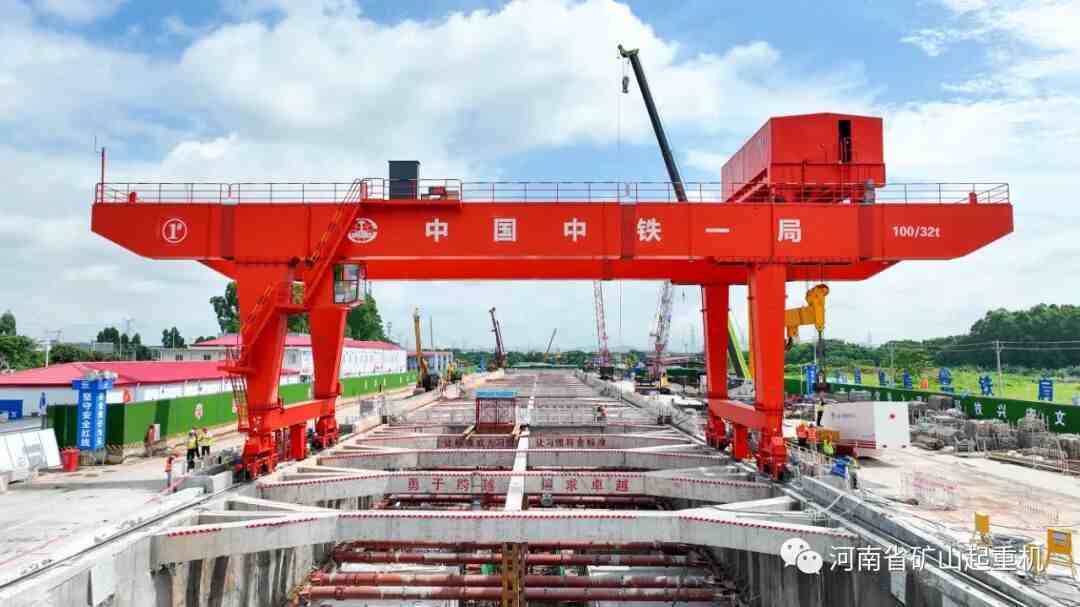
Metro tunnel construction often faces tough site conditions: tight construction schedules and frequent layout changes on site. To solve these challenges, double-girder gantry cranes used in metro tunnel construction are equipped with two key practical features, so it can efficiently adapt to changing tunnel construction sites:
The main girders allow flexible span adjustment. When the foundation pit location or lifting working area changes, no extra equipment is needed. Workers can adjust the span directly on site and resume construction. This greatly cuts equipment purchase costs and shortens on-site modification time.
With traditional muck removal methods, if the muck outlet position changes, contractors often have to add new equipment or move the whole crane repeatedly. This makes construction work complicated. Fitted with a steering tipping trolley, the crane can change the muck discharge direction freely according to the muck outlet position. Contractors only need one crane to lift and unload soil in multiple directions. It greatly improves the overall utilization rate of the machine and helps control equipment investment for the project.
Focused on reducing costs and boosting efficiency, these two features help construction teams achieve “one machine for multiple uses”. They are highly valuable core options when selecting metro muck handling equipment.
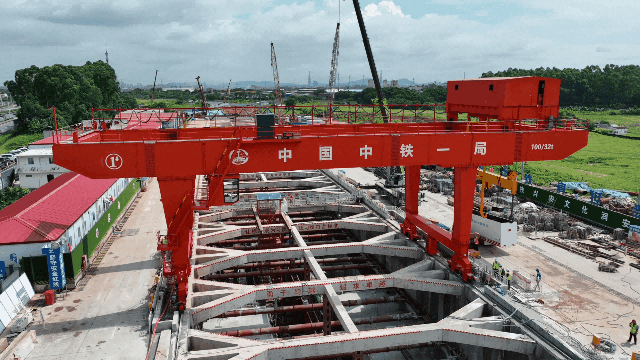
Lifting capacity: Decide based on the weight of one bucket of muck and tunnel segments. We recommend keeping a 15%–20% safety margin.
Span: Set the span according to the layout of muck trucks, stock yards and muck outlets. Models with span adjustment function are preferred.
Lifting height: It must cover the full height from the bottom of the foundation pit to the unloading level on the ground.
Work class: Metro muck removal requires frequent and continuous operation. Make sure you select a crane with a sufficiently high work class. Otherwise, the failure rate will be high.
Single discharge direction → A-frame legs.
Possible changes to muck discharge direction → U-frame legs plus steering tipping trolley.
Complete safety components are required, including wind-proof rail clamps, load limiters, travel limit devices, anti-collision devices for mechanisms, and emergency stop buttons. Full sets of safety protection devices are critical for stable machine operation and protecting site workers and equipment.
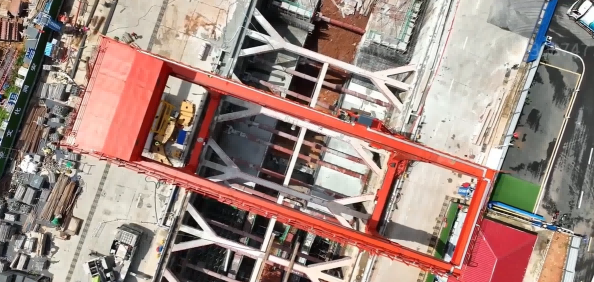
Subway tunnel construction is not a single-machine operation, but a complete assembly line. The crane needs to work closely with the shield machine, belt conveyor system, muck truck, segment lifting and other links.
Coordinating with shield excavation: The amount of muck is relatively fixed for each ring of shield excavation, and the rhythm of the muck discharging crane must match the excavation speed to avoid muck accumulation or work delays.
Coordinated with segment hoisting: In addition to lifting the slag bucket, the beam hanging hook is also responsible for lifting and transporting segments and other materials.
Cooperate with the scheduling of muck trucks: the dumping speed and position should be consistent with the rhythm of the muck trucks entering and exiting the site to ensure that the slag outlet is not blocked.
Properly planned and dispatched, double-girder gantry cranes used in metro tunnel construction can ensure the smooth operation of the entire tunnel shield excavation line; if coordination and connection are not in place, the slag discharging link can easily become a shortcoming that restricts the overall construction schedule.
Perform daily checks for wire rope wear, hook condition, the eccentric tipping shaft, and hydraulic system leaks;
Periodically verify the responsive and reliable operation of rail clamps and brakes;
Monitor hydraulic system pressure and oil temperature; replace hydraulic oil promptly;
Check electrical circuits, limit switches, and warning devices for proper functioning.
Operators must be certified and familiar with the operational logic of all mechanisms;
Ensure the load is securely fastened before lifting; overloading is strictly prohibited;
Engage the wind-resistant rail clamps to lock the machine onto the rails when shut down to prevent sliding;
Exercise caution or suspend operations during adverse weather (strong winds, rain, snow, or thunderstorms);
Personnel are strictly prohibited from standing or passing beneath suspended loads.
Slow or weak hoisting → Usually caused by insufficient hydraulic pressure or motor failure;
Incomplete tipping → Check the alignment of the slag-tipping hook with the eccentric tipping shaft;
Abnormal noise or tracking deviation during travel → Check for wheel wear and rail unevenness.
As urban rail transit networks continue to expand and contractors strive to boost efficiency and cut costs, specialized cranes for subway muck removal are exhibiting several distinct trends:
Higher tonnage and duty ratings: to accommodate subway tunnels with larger cross-sections and greater burial depths;
Intelligence and automation: the increasing adoption of remote control, variable-frequency speed regulation, and self-diagnostic capabilities to reduce manual labor and enhance safety;
Greater flexibility and multifunctionality: flexible design features—such as adjustable spans and steering/tilting discharge mechanisms—are becoming standard, enabling a single machine to perform multiple tasks;
Stricter safety standards: escalating requirements for safety systems, including wind protection, overload prevention, and collision avoidance.
Metro tunnel construction involves a series of interconnected processes; as a critical piece of core equipment, the specialized double-girder gantry crane used for muck removal directly impacts construction efficiency and safety. Only by selecting the right model based on site conditions, effectively utilizing features such as variable span and steering/tilting discharge, and ensuring standardized daily operation and maintenance, can the equipment's full value be realized and the tunnel project proceed efficiently and systematically.
