Model CD1, single speed wire rope electric hoist is small-sized lifting equipment, which can be mounted on single beam, overhead, gantry and jib cranes, with slight modification; it can also be used as a winch.
MORE
HOT PRODUCTS

Model CD1, single speed wire rope electric hoist is small-sized lifting equipment, which can be mounted on single beam, overhead, gantry and jib cranes, with slight modification; it can also be used as a winch.
MORE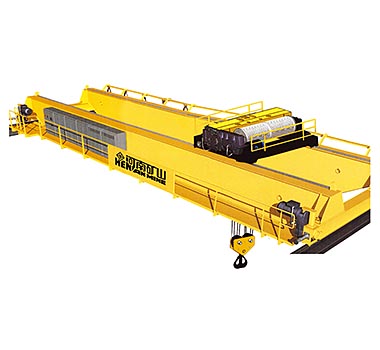
HNKS Crane Co., Ltd is one of Chinese leading manufacturers of many kinds’ cranes. Such as overhead Crane, gantry crane, European crane, tire rubber crane, metallurgy crane, portal crane, jib crane, electric hoist, grab bucket, etc.Welcome to Changyuan ...
MORE
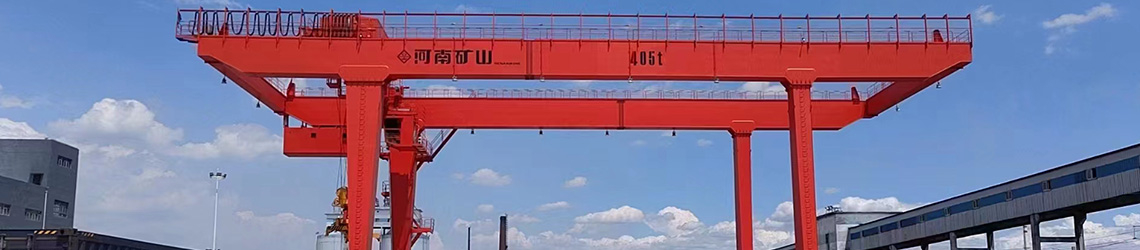
Gantry Crane actually is overhead crane with legs, it’s normally worked outdoors, and also sometimes indoors
MORE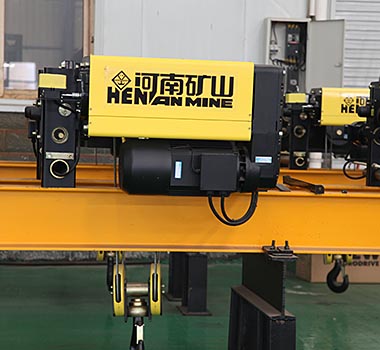
European wire ripe electric hoist adopts the European FEM design standards with advanced concept, the operation is simple, convenient and working is safety and efficient and meet the low noise, energy conservation and environment protection requiremen...
MORE8+8t Intelligent warehousing cranes for Agricultural Applications | Henan Mine Crane
2025-02-08
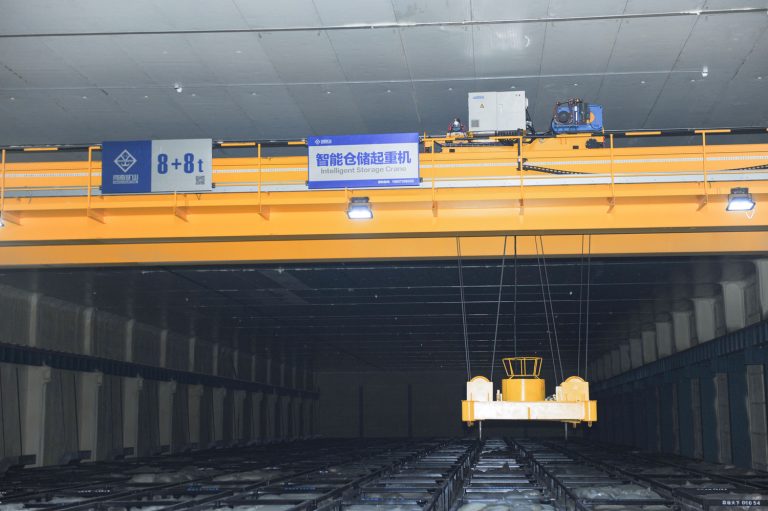
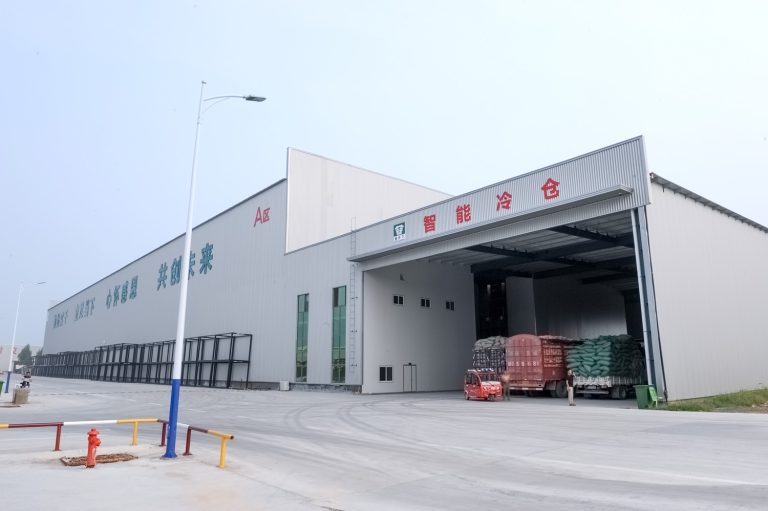
In 2018, an 8+8-ton intelligent warehousing crane, custom-manufactured by Henan Mine Crane for an unmanned cold storage project at an industrial park in Shandong, China, officially entered service. This was the first automated warehousing crane in China to be deployed in the agricultural sector.
In Jinxiang, Shandong, China, the garlic cultivation area remains stable at approximately 700,000 mu (approx. 46,667 hectares), with a total annual output exceeding 800,000 tons. Within traditional cold storage facilities and warehouses, quality inspectors and manual laborers work amidst the garlic's characteristically strong, pungent odor. Due to these harsh working conditions, personnel handling storage and transport must wear protective face masks or oxygen masks to perform tasks such as intake, stacking, and transfer over extended periods.
Traditional garlic warehousing relies heavily on small-crate storage and manual stacking and handling. This approach is not only labor-intensive but also results in low space utilization—both for land and cold storage facilities—and high overall storage costs. Consequently, the garlic industry urgently requires an automated, unmanned warehousing solution.
Henan Mine Crane has long specialized in lifting equipment and focused on addressing pain points within the agricultural sector. After conducting in-depth research into garlic storage practices and identifying significant room for improvement in space utilization and operational workflows, the company developed a tailored, intelligent garlic warehousing solution. This system has rapidly gained widespread recognition from local garlic growers and storage enterprises, as well as strong support from the government.
The equipment boasts excellent core performance specifications:
|
01 |
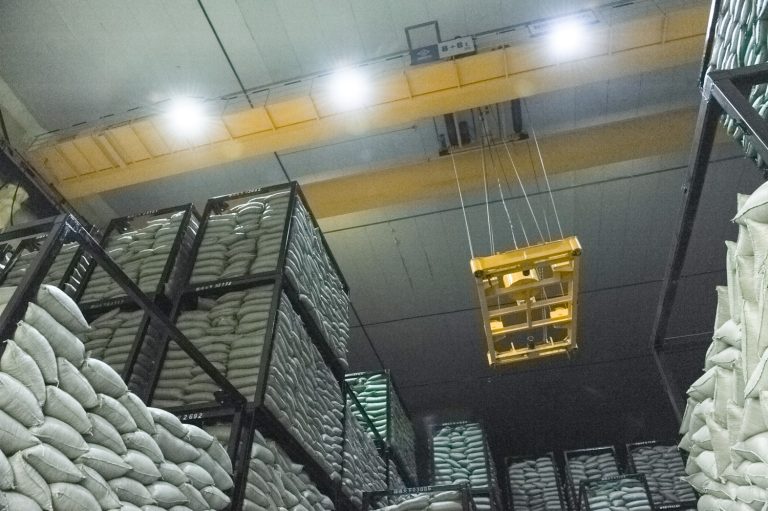
Features a wide span, long travel distance, and high lifting height; offers high operating speeds and ensures smooth, sway-free operation of the entire unit. |
|
02 |
Equipped with over 1,400 high-precision positioning points, achieving a spreader positioning accuracy of ≤±5mm and supporting "stack 4, pass 5" operational modes. |
|
03 |
It offers a wide range of control modes, supporting manual remote control, semi-automatic, and fully automatic operation. |
|
04 |
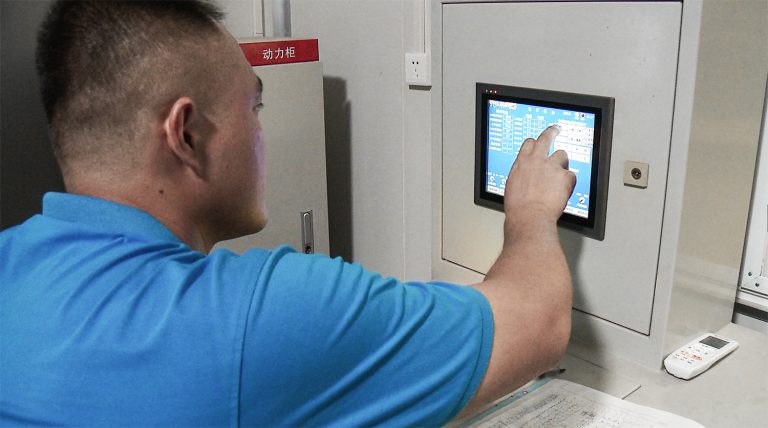
It connects to the backend database and smart terminals to monitor the storage status of garlic within the facility in real time. |
|
05 |
Integrates multiple core functions, including automated spreader-based pick-and-place palletizing, automatic positioning, electrical anti-sway control, remote monitoring, and intelligent warehouse management. |
Table 1
|
Lifting Weight(t) |
16/5 |
||||||||
|
Working class |
A5 |
||||||||
|
Span(m) |
10.5 |
13.5 |
16.5 |
19.5 |
22.5 |
25.5 |
28.5 |
31.5 |
|
|
Max Lifting Height(m) |
main lift |
18 |
|||||||
|
aux lift |
18 |
||||||||
|
Speed(m/min) |
main lift |
0.76-7.6 |
|||||||
|
aux lift |
0.88-8.8 |
||||||||
|
Travelling of crab |
3.2-32 |
||||||||
|
Travelling of trolley |
5.1-51 |
||||||||
|
Limit Size(mm) |
C |
560 |
|||||||
|
C1 |
1057 |
||||||||
|
C2 |
1617 |
||||||||
|
H3 |
116 |
8 |
-92 |
-94 |
|||||
|
H4 |
390 |
||||||||
|
Main Size(mm) |
H |
1824 |
1932 |
2032 |
2034 |
||||
|
H1 |
50 |
152 |
194 |
344 |
444 |
544 |
546 |
||
|
H2 |
2437 |
2572 |
2617 |
2767 |
2867 |
2967 |
2969 |
||
|
H5 |
290 |
||||||||
|
b |
157 |
||||||||
|
K |
2400 |
||||||||
|
W |
4400 |
||||||||
|
B |
6204 |
||||||||
|
Steel track recommended |
P43 |
||||||||
|
Total power(kW) |
38.5 |
40.5 |
|||||||
|
Max wheel load(kN) |
57 |
61 |
64 |
67 |
71 |
74 |
78 |
82 |
|
|
Power Source |
three-phase A.C 50Hz 380V |
||||||||
Table 2
|
Lifting Weight(t) |
20/5 |
||||||||
|
Working class |
A5 |
||||||||
|
Span(m) |
10.5 |
13.5 |
16.5 |
19.5 |
22.5 |
25.5 |
28.5 |
31.5 |
|
|
Max Lifting Height(m) |
main lift |
18 |
|||||||
|
aux lift |
18 |
||||||||
|
Speed(m/min) |
main lift |
0.62-6.2 |
|||||||
|
aux lift |
0.88-8.8 |
||||||||
|
Travelling of crab |
3.2-32 |
||||||||
|
Travelling of trolley |
5.0-50 |
||||||||
|
Limit Size(mm) |
C |
560 |
|||||||
|
C1 |
1057 |
||||||||
|
C2 |
1617 |
||||||||
|
H3 |
106 |
-2 |
-102 |
-104 |
-106 |
||||
|
H4 |
390 |
||||||||
|
Main Size(mm) |
H |
1864 |
1972 |
2072 |
2074 |
2076 |
|||
|
H1 |
102 |
144 |
194 |
294 |
346 |
446 |
498 |
548 |
|
|
H2 |
2525 |
2567 |
2617 |
2717 |
2769 |
2869 |
2921 |
2971 |
|
|
H5 |
290 |
||||||||
|
b |
157 |
||||||||
|
K |
2400 |
||||||||
|
W |
4400 |
||||||||
|
B |
6204 |
||||||||
|
Steel track recommended |
|
||||||||
|
Total power(kW) |
38.5 |
40.5 |
|||||||
|
Max wheel load(kN) |
66 |
70 |
74 |
77 |
81 |
85 |
89 |
93 |
|
|
Power Source |
three-phase A.C 50Hz 380V |
||||||||
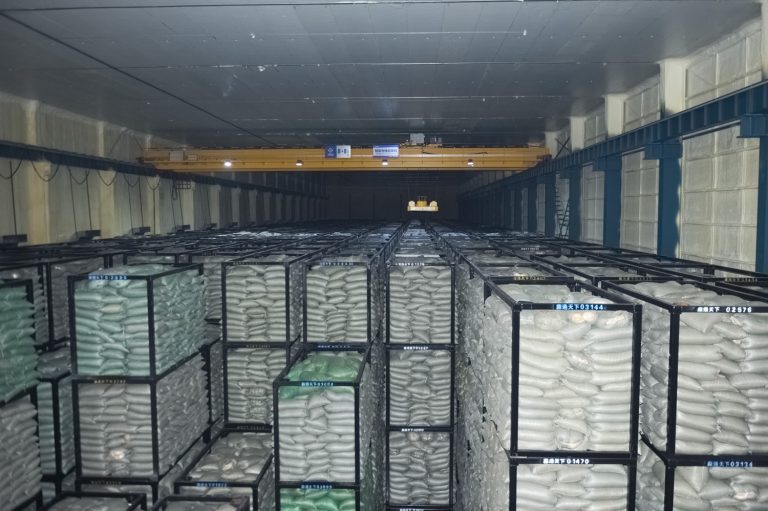
The new storage solution replaces traditional small-crate methods with specialized large crates for storing finished garlic, complemented by custom-designed lifting gear. Utilizing intelligent warehouse cranes, the system automatically identifies crate codes to execute the entire process—from automated palletizing to retrieval—thereby completely eliminating the need for manual stacking.
By integrating hardware with control systems, this equipment eliminates high-intensity, high-risk manual labor, liberating workers from the pungent and physically demanding environment of garlic storage facilities and driving the transformation of garlic cold storage toward an unmanned, digital model.
Intelligent warehouse cranes facilitate high-density, multi-level storage within cold storage facilities, dramatically enhancing storage efficiency per unit of floor area. A single cold storage unit under this project can accommodate up to 60,000 tons of inventory—delivering ten times the land-use efficiency of conventional cold storage facilities. This approach exponentially increases storage capacity amidst limited land resources while significantly reducing the space required for facility construction.
Computer systems facilitate the tracking of large-crate cargo information, location logging, load optimization, and precision positioning. The equipment supports continuous, round-the-clock operation, significantly minimizing downtime. Automated overhead cranes capture operational data in real-time, ensuring seamless alignment between physical inventory and system records; furthermore, the integration of high-precision positioning and electrical anti-sway technologies effectively mitigates impact damage during the lifting and transport of large crates, thereby reducing losses associated with garlic storage and handling.
The comprehensive solution delivers cost savings across the board:
Electricity savings: Centralized stacking of goods concentrates the refrigerated space and minimizes heat exchange with the outside environment per unit of space, significantly lowering refrigeration energy consumption.
Labor savings: Standardized, intelligent workflows drastically reduce the number of personnel required for inbound, stacking, and outbound operations.
Time savings: Highly coordinated equipment scheduling significantly shortens the operational cycle for goods entering and leaving the warehouse.
The combined benefits of saving electricity, labor, and time result in a direct 60% reduction in overall warehousing costs.
In traditional garlic cold storage facilities, stacking operations for intake and retrieval require twenty to thirty workers who must perform heavy physical labor while wearing padded clothing and gas masks in environments characterized by low temperatures and pungent odors. With the adoption of fully automated intelligent warehouse cranes, the entire facility requires only two on-duty personnel for management. Loading and unloading a single truck takes just five minutes—achieving an efficiency rate 100 times that of traditional manual methods—thereby completely liberating workers from harsh and grueling on-site operations.
|
Intelligent features |
Specific role |
Value for agricultural warehouses |
|
Remote wireless control / Unmanned operation |
Operators do not need to board the vehicle and can even operate it from a central control room |
Reduce manpower requirements and lower operational risks |
|
Automatic Positioning and Bin Location |
The crane automatically identifies the shelf position and docks accurately |
Faster and more accurate inbound and outbound processing |
|
Anti-sway control system |
Suppressing load sway during lifting and travel |
Reduce losses caused by cargo bumping or bags falling |
|
Barcode / RFID / Vision Recognition |
Automatically identify cargo batches and labels |
Traceable inbound and outbound operations; alignment between records and actual inventory |
|
WMS/ERP System Integration |
Integration of cranes with warehouse management software |
Automated bookkeeping and real-time inventory visibility |
|
Variable-frequency speed control |
Smooth starting and stopping; controllable speed |
Safer and more energy-efficient |
|
Multiple layers of security protection |
Overload protection, limit control, anti-collision, anti-pinch, etc |
Protecting Personnel and Equipment |
Many buyers ask: "Is this system designed solely for storing garlic?" The answer is no.
The core capabilities of this solution center on "large containers, automatic identification, automated stacking, and automated outbound processing." It is suitable for any goods handled in crates, boxes, or on pallets that require high-density storage and rapid inbound/outbound operations, making it applicable across sectors such as grain, produce, frozen goods, food, pharmaceuticals, and e-commerce warehousing and distribution. While the industrial park implementation focuses on an agricultural setting, the technology itself constitutes a universal, comprehensive intelligent warehousing solution.
The solution supports both the retrofitting of existing warehouses and the construction of new ones. Its core components are "large bins, specialized lifting attachments, intelligent cranes, and a management system"; the cranes operate along rails mounted on the warehouse ceiling, coordinating with ground-level storage zones. Existing warehouses can be upgraded—provided their structural specifications regarding span, height, and load-bearing capacity meet the requirements—without the need for demolition and reconstruction.
Compared to forklifts, AGVs, and conventional cranes, the positioning of intelligent warehouse cranes is distinct: Forklifts are suitable for short-distance horizontal transport but require operators, face limitations in stacking height and density, and impose a physical strain on personnel in cold storage environments. AGVs excel at horizontal ground transport but require additional equipment for multi-level stacking, and low-temperature environments place high demands on their batteries and sensors. Conventional cranes offer basic lifting and lowering capabilities but lack automatic identification, positioning, and anti-sway functions; they still require manual assistance for stacking, falling short of true automation. In contrast, intelligent warehouse cranes integrate lifting, automatic positioning, automatic stacking, and information management into a single system, serving as a comprehensive solution for high-density, unmanned warehousing. If your goal is a "low-manpower, high-density, and 24/7 operation" model, this is the ideal solution.
|
Application Areas |
Specific Scenarios / Industries |
Key Pain Points and Needs |
Application Value and Advantages of Intelligent Warehousing Cranes |
|
Modern Agriculture and Agricultural Product Processing |
Cold storage facilities for bulk agricultural products such as garlic, fresh vegetables, and fruits. |
The storage environment is harsh, characterized by unpleasant odors, low temperatures, and high humidity. |
Unmanned operations: Replaces human workers in environments with pungent odors and low temperatures, allowing a team of just two to manage the entire warehouse. |
|
Traditional manual stacking is characterized by labor shortages, high costs, and significant risks. |
Three-dimensional large-crate storage: multiplies storage capacity per unit area and significantly reduces losses and overall costs. |
||
|
Low space utilization and significant losses |
|||
|
Cold Chain Logistics and Fresh Produce Warehousing |
Low-temperature cold storage (-18°C to -25°C) for frozen meat, aquatic products, and quick-frozen foods. |
Manual labor cannot be sustained continuously for long periods in low-temperature environments. |
Low-Temperature Resilience and High-Efficiency Synergy: Adapted for extreme low-temperature environments, supporting 24-hour continuous operation. |
|
Space in cold storage facilities is at a premium, yet traditional stacking methods entail high energy consumption for refrigeration. |
High-density, compact stacking: minimizes external heat exchange for the cold storage, resulting in significant energy savings and highly efficient loading and unloading. |
||
|
High efficiency requirements for inbound and outbound operations; a high degree of consistency between records and actual inventory. |
|||
|
Pharmaceuticals and Biological Products |
Cool storage and cold storage for pharmaceuticals; high-bay warehouses for medical devices. |
Extremely high requirements for inbound and outbound batch management, FIFO (First-In, First-Out), temperature and humidity control, and error prevention. |
High-precision positioning and data integration: enabling precise, full-lifecycle tracking of goods and 100% alignment between records and actual inventory. |
|
Manual inventory counting suffers from high error rates and low efficiency. |
Cleanliness and Intelligent Management: Minimizing human contact while meeting the pharmaceutical industry's strict regulations and digital traceability requirements. |
||
|
Heavy Industry and Manufacturing |
Steel, machinery manufacturing, automotive parts, and metal raw material warehouses. |
The cargo is heavy, extremely bulky, and irregularly shaped. |
Long-span capability and electrical anti-sway technology: Completely solves the problem of load oscillation during the handling of heavy materials, ensuring smooth operation without swaying. |
|
Severe swaying is prone to occur during the lifting and transport process, posing a high safety risk. |
High load-bearing capacity: Meets the requirements for high-intensity, high-frequency, three-dimensional storage of large-scale components and raw materials in heavy industry. |
||
|
Modern Integrated Logistics and E-commerce |
Third-party logistics (3PL), large-scale comprehensive distribution centers, and high-standard warehouses. |
A vast number of SKUs, massive throughput, and extremely high requirements for inbound and outbound processing speed. |
Automated Palletizing and Multi-Mode Control: Supports flexible switching between manual, semi-automatic, and fully automatic modes. |
|
Land and labor costs continue to rise. |
Drastically shorten operational cycles: exponentially boost loading and unloading efficiency, and significantly reduce overall warehousing and logistics costs. |
1. Rated Lifting Capacity: The maximum weight of the load must be below the rated value, allowing for a safety margin.
2. Span (L): The center-to-center distance of the crane rails; this must be customized based on the actual width of your warehouse and is a key factor influencing cost.
3. Lifting Height (H): Calculated based on the height of the top storage tier plus the height of the lifting attachment and a safety margin; it is better to err on the side of a higher specification.
4. Duty Class (A3–A8): Determines the equipment's workload capacity. Class A4–A5 is generally sufficient for agricultural warehouses, though higher classes may be needed for high-throughput operations. Selecting a class that is too low will directly impact the equipment's service life and failure rate.
5. Lifting Attachment Type: Options include hooks, grabs, electromagnetic chucks, or specialized clamps. Selection depends on the nature of the goods; grabs are suitable for bulk grain, while hooks are ideal for pallets and bulk bags.
6. Operating Environment: Factors such as dust (e.g., grain dust), temperature, humidity, and corrosive gases determine the required ratings for explosion-proofing, corrosion resistance, and dust protection.
7. Power Supply and Rails: Verify that the facility's power supply, rail beams, corbels, and foundations meet installation requirements; civil engineering modifications can represent a significant hidden cost.
8. Level of Automation: Refer back to Section 5 and confirm your specific list of required functions item by item.
In terms of industry trends, agricultural warehousing is shifting from a "manual labor plus forklift" model toward intelligent, digital, and low-manpower operations. The 8+8t intelligent warehouse crane represents just one component of this evolution; looking ahead, several other directions are emerging:
Fully automated, unmanned overhead cranes: Pilot programs are being rolled out in large-scale grain depots and distribution centers with high throughput, utilizing computer vision and AI to enable unmanned palletizing.
Digital twins and remote O&M: Equipment connectivity allows for real-time operational monitoring, fault early warning, and remote diagnostics.
Deep integration with the agricultural IoT: Linking data on temperature, humidity, and pest conditions with warehousing operations to create truly "smart grain depots."
Green energy efficiency: The use of variable-frequency drives and energy recovery technologies to reduce energy consumption.
Overall, the 8+8t intelligent warehouse crane for agricultural applications is no longer a "high-end luxury" reserved for large grain depots or agricultural supply enterprises; rather, it has become a practical tool for reducing costs and boosting efficiency in smart agricultural warehousing.
When selecting equipment, enterprises need not blindly pursue every available intelligent feature; the key lies in matching the load capacity, span, and intelligent modules to their specific warehouse conditions, cargo types, and budget constraints.
As the digitalization of agricultural warehousing continues to advance, the application scenarios for intelligent warehouse cranes will keep expanding. If you are planning a warehouse upgrade, it is advisable to conduct on-site visits to existing installations and compare various options based on your actual operational needs to select the lifting solution best suited to your business.
