Model CD1, single speed wire rope electric hoist is small-sized lifting equipment, which can be mounted on single beam, overhead, gantry and jib cranes, with slight modification; it can also be used as a winch.
MORE
HOT PRODUCTS

Model CD1, single speed wire rope electric hoist is small-sized lifting equipment, which can be mounted on single beam, overhead, gantry and jib cranes, with slight modification; it can also be used as a winch.
MORE
HNKS Crane Co., Ltd is one of Chinese leading manufacturers of many kinds’ cranes. Such as overhead Crane, gantry crane, European crane, tire rubber crane, metallurgy crane, portal crane, jib crane, electric hoist, grab bucket, etc.Welcome to Changyuan ...
MORE
Gantry Crane actually is overhead crane with legs, it’s normally worked outdoors, and also sometimes indoors
MORE
European wire ripe electric hoist adopts the European FEM design standards with advanced concept, the operation is simple, convenient and working is safety and efficient and meet the low noise, energy conservation and environment protection requiremen...
MORE300t Double Girder Bridge Crane for Bridge Construction | Henan Mine Crane
2023-02-14
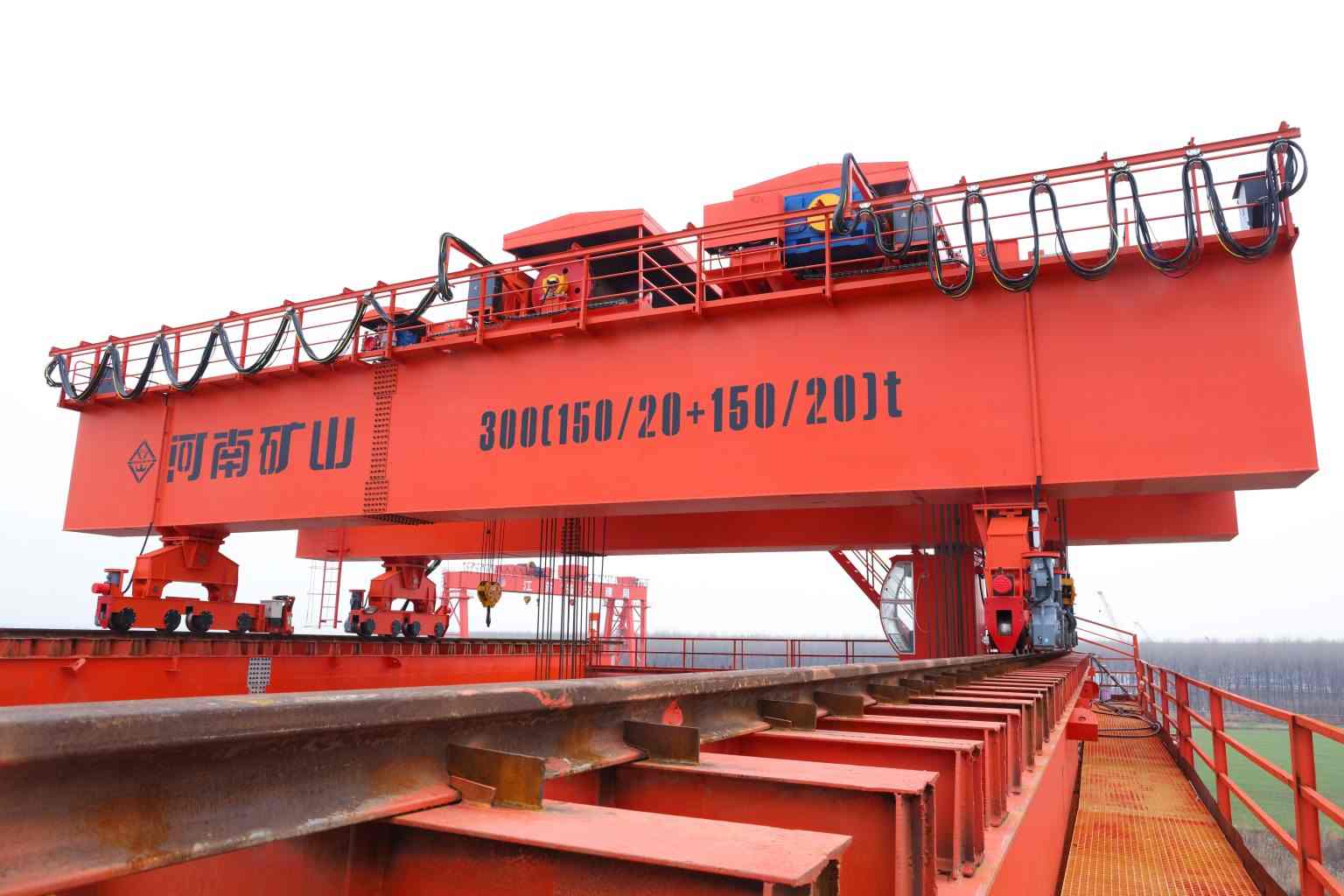
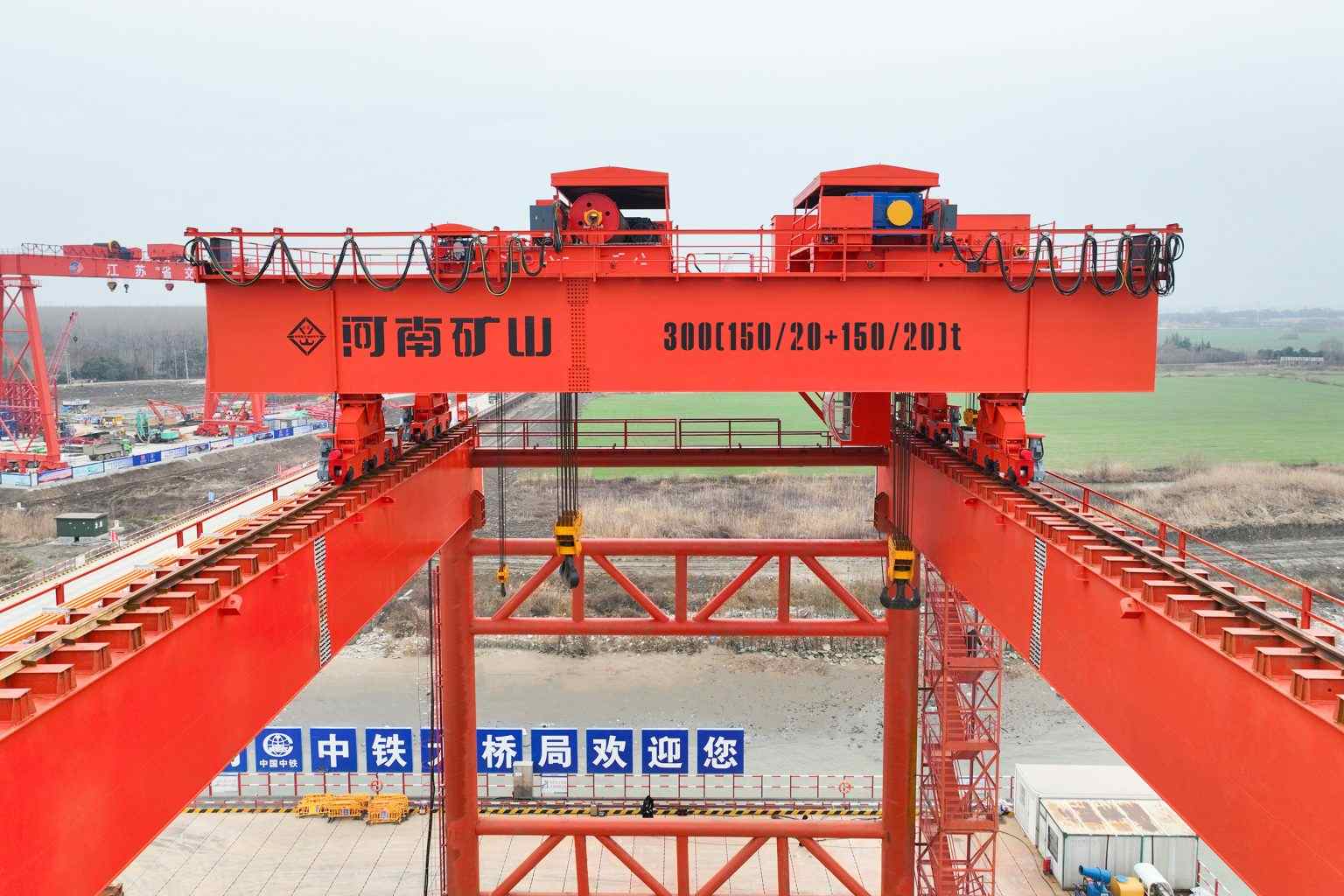
Recently, a 300-ton double-girder bridge crane manufactured by Henan Mine Crane—towering majestically and exuding an imposing presence—has helped achieve a new breakthrough in bridge construction.
This new 300-ton double-girder bridge crane is primarily designed for material lifting operations at wharf hoisting stations during bridge construction. Incorporating a modular design philosophy and utilizing modern computer technology, the crane integrates advanced domestic components, new materials, and innovative manufacturing processes to deliver a unit characterized by lightweight construction, versatility, energy efficiency, environmental friendliness, and high-tech capabilities.
|
01 |
Modular design with a high degree of standardization improves component utilization. |
|
02 |
The structure is lightweight, the gear reducers feature hardened tooth surfaces, and the electrical system design is highly integrated. |
|
03 |
Full variable-frequency control ensures smooth operation and precise positioning; the system is maintenance-free and offers energy savings. |
|
04 |
The crane features a specially designed system with multi-sided ports reserved for upgrades, enabling easy, one-touch equipment upgrades. |
|
Lifting Weight(t) |
300/75 |
400/80 |
|||||||||||||
|
Working class |
A5 |
A5 |
|||||||||||||
|
Span(m) |
13 |
16 |
19 |
22 |
25 |
28 |
31 |
13 |
16 |
19 |
22 |
25 |
28 |
31 |
|
|
Max Lifting Height(m) |
main |
24 |
23 |
||||||||||||
|
aux |
26 |
25 |
|||||||||||||
|
Speed(m/min) |
main lift |
2.4 |
2.6 |
||||||||||||
|
aux lift |
6.8 |
5.1 |
|||||||||||||
|
Travelling of crab |
28 |
31 |
|||||||||||||
|
Travelling of trolley |
42 |
45 |
|||||||||||||
|
Limit size |
C |
2400 |
3000 |
||||||||||||
|
C1 |
1400 |
1600 |
|||||||||||||
|
C2 |
2800 |
3400 |
|||||||||||||
|
H3 |
1500 |
1800 |
|||||||||||||
|
H4 |
980 |
1280 |
|||||||||||||
|
Main size |
H |
5850 |
6500 |
||||||||||||
|
H1 |
500 |
700 |
1000 |
1200 |
|||||||||||
|
H2 |
3000 |
3200 |
3500 |
3700 |
|||||||||||
|
H5 |
1200 |
1200 |
|||||||||||||
|
b |
400 |
450 |
|||||||||||||
|
K |
6000 |
6000 |
|||||||||||||
|
B |
12100 |
12300 |
|||||||||||||
|
Steel track recommended |
QU120 |
QU120 |
|||||||||||||
|
Total power(kW) |
485 |
501 |
537 |
608 |
624 |
640 |
|||||||||
|
Max.wheel pressure |
496 |
523 |
544 |
560 |
575 |
588 |
602 |
631 |
669 |
697 |
720 |
740 |
757 |
774 |
|
|
Power source |
3-phase A.C 380V 50Hz |
3-phase A.C 380V 50Hz |
|||||||||||||
Double-girder, dual-rail design: Features box-section or truss-type main girders with internal stiffening ribs to effectively prevent twisting or lateral instability during heavy-load operations.
High-strength alloy steel: The primary load-bearing structure typically utilizes Q345B or higher-grade low-alloy, high-strength structural steel, ensuring fatigue resistance under ultimate loads.
Main girder deflection control: Elastic deformation under static and dynamic loads is strictly controlled to ensure smooth operation of the bridge and trolley, preventing issues such as rail binding or load swaying caused by structural deformation.
Redundant drive systems: The main hoisting mechanism typically employs a dual-motor or multi-motor drive configuration, utilizing a differential or a high-precision synchronous control system to ensure absolute synchronization during dual-hook or multi-point lifting operations.
Variable-frequency speed control: Advanced AC variable-frequency speed control technology is fully implemented across the bridge travel, trolley travel, and hoisting mechanisms, enabling smooth, stepless transitions ranging from millimeter-level inching and positioning to high-speed operation.
Wire rope and sheave assembly configuration: High-strength, multi-strand, wear-resistant hoisting wire ropes are paired with large-diameter cast-steel sheave assemblies, significantly reducing rope wear and extending service life.
The entire machine utilizes a standardized modular design, separating the load-bearing main girder, traveling end carriages, lifting power unit, intelligent electrical control system, and safety protection modules into independent units; all interfaces adhere to industry-standard specifications. This modular design offers significant advantages given the characteristics of bridge and terminal construction—such as flexible schedules, dynamic site adjustments, and the need for long-term equipment deployment. First, the equipment is easy to install, disassemble, and relocate, allowing for rapid repositioning to keep pace with construction progress. Second, the high interchangeability of components enables the replacement of specific modules following a malfunction without requiring a full system shutdown for maintenance, thereby maximizing the continuity of material handling operations. Third, functional modules can be added or removed as needed, allowing the equipment to flexibly adapt to changing operational requirements regarding the types and tonnages of construction materials.
Terminal facilities associated with bridges are typically located along rivers or coasts, subjecting them to year-round exposure to high humidity, heavy salt spray, wind, and rain. These harsh conditions demand exceptional corrosion resistance and durability. The equipment utilizes high-strength, weather-resistant alloy materials combined with advanced multi-layer electrostatic coating and anti-corrosion passivation processes. Additionally, transmission components are made from high-strength, wear-resistant alloys and precision-machined to minimize mechanical wear, while the electrical system employs sealing techniques that provide protection against water, dust, and salt spray. These features ensure seamless adaptation to long-term outdoor terminal operations, effectively extending the equipment's service life and reducing the failure rate in outdoor environments.
The equipment integrates advanced features such as an intelligent PLC control system, variable-frequency stepless speed regulation, multiple safety limit protections, intelligent fault early warning, and remote monitoring, moving beyond the crude control methods of traditional cranes. During terminal material handling, it enables smooth, stepless starting and stopping as well as precise low-speed positioning, effectively eliminating the swaying, shifting, or collision of heavy loads—making it ideal for operations in confined spaces and areas with dense material stacking. Furthermore, the system monitors load, travel, wind speed, and equipment status in real-time, automatically issuing warnings and triggering emergency stops in the event of anomalies; this intelligent, end-to-end control significantly reduces risks associated with manual operation.
Safety is at the core of the design for the 300-ton double-girder bridge crane. The equipment is equipped with a comprehensive suite of multi-layered safety protection devices to eliminate operational risks from every angle.
|
Overload limiter |
Automatically cuts off power and triggers an alarm when the load exceeds the rated weight, preventing damage caused by overloading. |
|
Height-limiting device |
Dual upper and lower limit protection prevents collisions and wire rope breakage caused by over-travel in either the upward or downward direction. |
|
Emergency stop system |
Equipped with manual and remote emergency stop buttons, capable of rapidly cutting off the power supply and halting all operations in the event of an abnormality. |
|
Anti-collision device |
Infrared anti-collision sensors are installed at both ends of the crane to prevent collisions between multiple cranes or with the factory structure. |
|
Phase Sequence & Overvoltage/Undervoltage Protection |
Protect electrical systems from damage caused by abnormal power supply and ensure stable electrical operation |
|
Rain and Dust Protection |
All electrical components feature an enclosed protective design, making them suitable for harsh indoor and semi-outdoor operating environments. |
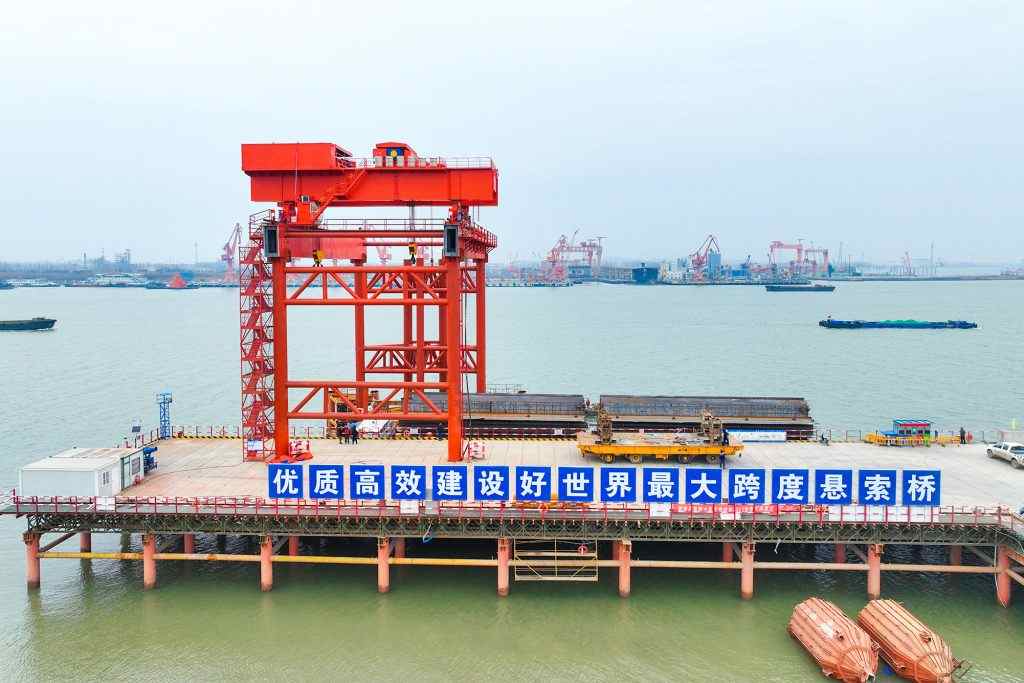
When selecting a double girder bridge crane for a pier-based lifting station in bridge construction, the following parameters should be carefully verified:
Determine the rated lifting capacity based on the weight of the heaviest single component, accounting for the weight of the rigging and the necessary safety factor. The lifting height must accommodate the loading height on the vessel deck and account for wave-induced motion; the typical range is 6 to 50 meters.
Determined by the width of the pier's lifting trestle. A double-girder structure supports common spans of 10.5 to 31.5 meters and can be customized to exceed 40 meters based on the actual layout.
Given the high frequency and prolonged duration of pier loading and shipping operations, heavy-duty or extra-heavy-duty classes (A6, A7, or even A8) should be selected rather than light-to-medium classes (A1–A5). The duty class directly determines the fatigue life of the steel structure and mechanical components, as well as the overall reliability of the crane.
High-tonnage bridge cranes are often equipped with dual trolleys or dual hooks to facilitate load balancing and synchronized tandem lifting. Variable frequency drive (VFD) systems should be used for the hoisting mechanism to ensure smooth beam placement and precise positioning.
As pier operations are subject to wind and wave conditions, the crane should be equipped with features such as VFD speed control, anti-sway control, overload limiters, and travel/hoist limit switches to ensure safe and stable lifting operations.
In addition to double girder bridge cranes, other methods for terminal load-out and shipment include roll-on/roll-off (Ro-Ro) operations and the use of crawler cranes or portal cranes. Compared to crawler or mobile cranes, rail-mounted double-girder bridge cranes offer superior positioning accuracy and are unaffected by the center of gravity of individual loads or site terrain variations, making them better suited for continuous operations at fixed locations like terminal trestles. Compared to Ro-Ro operations, lift-based loading imposes fewer stability requirements on the transport vessel and accommodates a wider range of vessel types. Furthermore, the double-girder structure provides greater rigidity and stability for long-span, heavy-tonnage applications than single-girder or standard gantry designs.
Project teams should select the optimal method based on a comprehensive assessment of component weight, terminal conditions, vessel type, and the project schedule; if necessary, they should combine lifting and Ro-Ro methods to complete the shipment safely and cost-effectively. While bridge cranes entail higher initial capital investment, their advantages—rapid positioning, low failure rates, and suitability for continuous operation—can significantly reduce the per-unit handling cost during large-scale, long-duration shipment projects. Consequently, project teams should evaluate the initial purchase cost alongside the total lifecycle costs of operation and maintenance.
Hoisting of steel box girder segments, steel tower segments, and heavy embedded parts. Lifting large bridge components from platform transporters, shifting them laterally, and lowering them onto transport barges to facilitate their launch and shipment.
Handling and hoisting within the steel structure workshop—including box girder segments, truss sections, cable saddles, and anchor blocks—to manage component transfer after cutting, assembly, welding, component turning, and finished product dispatch.
Operations at highway or railway girder yards involving the hoisting of high-tonnage precast box girders and T-beams. Tasks include hoisting formwork and rebar cages, moving finished girders from casting beds to storage areas, and assisting with loading onto girder transport vehicles.
Hoisting large anchoring components, prestressed steel tendon assemblies, and formwork systems at suspension bridge anchorage sites; hoisting steel tower segments and construction machinery during the tower construction phase. Serves as an alternative to crawler cranes, enabling continuous heavy-duty hoisting operations within fixed work zones.
Construction and maintenance of marine trestles and temporary work platforms; hoisting heavy equipment such as steel pipe piles, steel casings, Bailey truss panels, drilling rigs, and pump units; dismantling and transporting platform steel structures during the project completion phase.
Operations at on-site maintenance workshops involving the hoisting of drilling rigs, jacks, large hydraulic equipment, and winch units to facilitate disassembly, repair, and parts replacement.
Unloading, transferring, and positioning heavy bridge accessories such as steel deck panels, orthotropic deck units, crash barriers, large bearings, and expansion joints.
Hoisting steel cages, formwork, and ballast components for immersed tube tunnel segments, and executing the relocation of heavy components during the segment precasting phase.
This 300-ton double-girder bridge crane by Henan Mine Crane is a robust, intelligent heavy-lifting solution customized for modern bridge construction. Featuring reliable structure, multi-layer safety safeguards and strong environmental adaptability, it efficiently tackles hoisting challenges for large bridge components.
In recent years, Henan Mine Crane has become a "preferred brand" for major national projects—spanning sectors such as bridge construction, the military industry, and aerospace—thanks to its superior product quality, stable and reliable performance, and outstanding technical advantages. Henan Mine Crane remains steadfast in its commitment to the quality philosophy of "striving for excellence," and will continue to develop high-quality products to further contribute to the high-quality development of China's hoisting equipment industry.
